How Artificial Intelligence is Changing Consumer Technology in 2026
Artificial intelligence has moved far beyond chatbots and experimental software. In 2026, AI is becoming a fundamental part of the consumer technology people use every day. From smartphones and laptops to smart home devices, shopping platforms and wearable technology, artificial intelligence is changing how products work and how people interact with them.
The biggest shift is that AI is becoming less visible. Instead of always requiring users to open a separate AI application, intelligence is increasingly built directly into devices and services. Smartphones can understand context, computers can assist with tasks, smart appliances can adapt to household routines, and shopping platforms can help consumers make purchasing decisions.
This transformation is creating a new generation of consumer technology where devices are not simply tools waiting for commands. They are becoming more responsive, personalized and capable of anticipating what users may need.
Table of Contents
- AI is Becoming a Core Smartphone Feature
- AI PCs are Changing the Computer Experience
- Smart Homes are Becoming More Adaptive
- AI is Transforming Wearables
- AI is Changing How Consumers Shop
- Personalization is Becoming More Powerful
- AI is Moving From Cloud to Device
- The Cost of AI-Enabled Technology
- Privacy and Trust Matter More Than Ever
- The Future of Consumer Technology is More Intelligent
AI is Becoming a Core Smartphone Feature
Smartphones remain at the centre of consumer technology, but their role is changing rapidly. Artificial intelligence is now being integrated into cameras, search, communication, productivity tools and everyday applications.
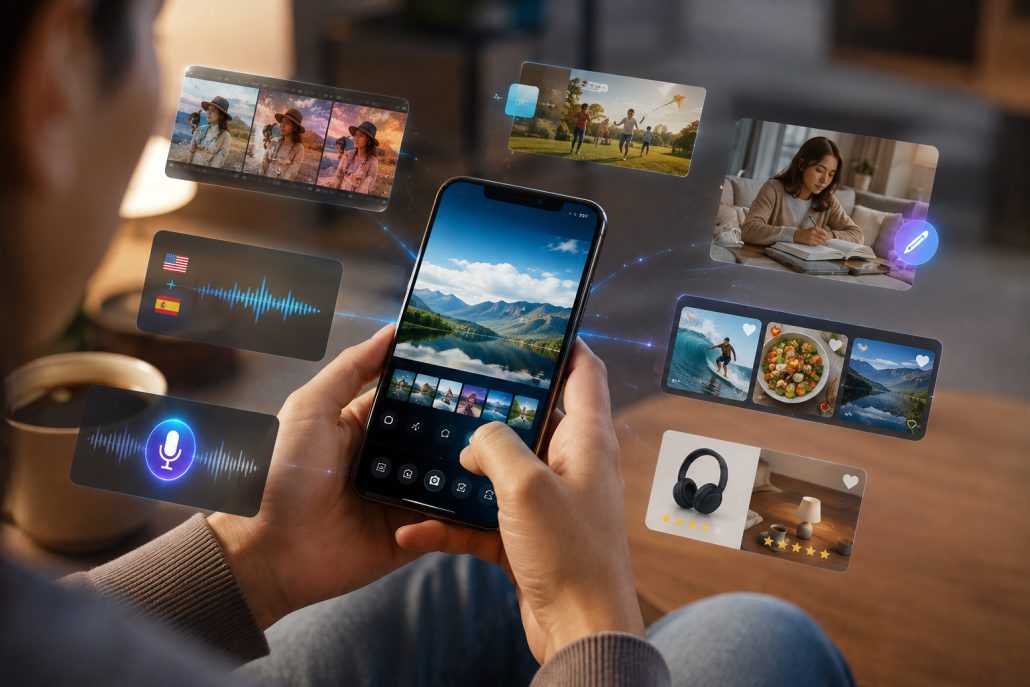
AI-powered smartphone with photography, translation, voice assistance, content creation and personalized recommendations features.
AI-powered smartphones can improve photographs automatically, remove unwanted objects, translate conversations, summarize information and generate or edit content. More importantly, newer AI features are becoming context-aware. Instead of simply responding to a specific command, an AI assistant can understand what the user is trying to accomplish and help complete multiple steps.
This is particularly important in 2026 because AI is becoming a purchasing consideration. A CyberMedia Research study reported that 71% of surveyed Indian smartphone users aged 18-35 were using generative AI features multiple times a week, while 59% considered AI when buying a new smartphone.
The smartphone is therefore evolving from an app-driven device into a more intelligent personal assistant.
AI PCs are Changing the Computer Experience
Artificial intelligence is also reshaping laptops and desktop computers. Modern AI PCs increasingly include dedicated processing hardware designed to handle AI workloads efficiently.
This allows certain AI tasks to run locally rather than relying entirely on cloud servers. Local processing can improve responsiveness while offering potential privacy benefits because some information does not need to leave the device.
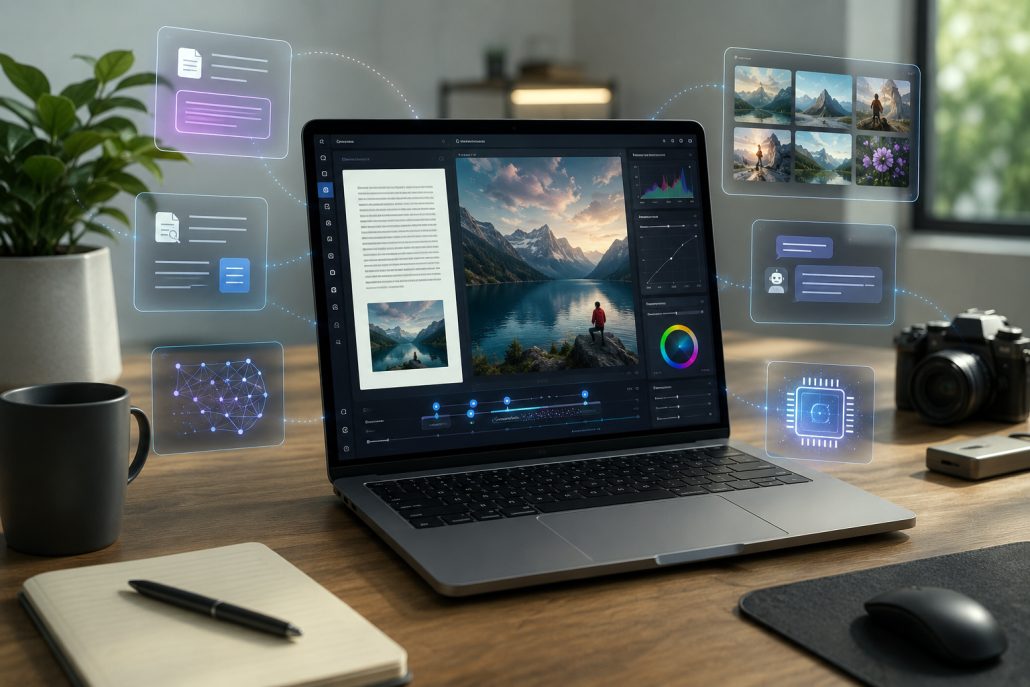
AI-powered laptop displaying writing, image editing, document analysis and productivity tasks on a modern workspace.
AI PCs can assist with writing, image creation, meeting summaries, document searches, accessibility and productivity. AI agents are also beginning to change how people interact with computers. Instead of opening several applications and completing every step manually, users can increasingly describe an intended outcome and allow AI to coordinate tasks.
This represents an important change in computing. The traditional computer waits for instructions. The AI-powered computer can understand context, recommend actions and increasingly help execute them.
Smart Homes are Becoming More Adaptive
The smart home is another area where artificial intelligence is making a noticeable difference. Earlier smart home technology often depended on simple commands, schedules and automation rules. AI is making these systems more flexible.
Smart thermostats can learn patterns, security cameras can identify unusual activity, robot vacuums can navigate environments more intelligently, and voice assistants can understand more natural requests.
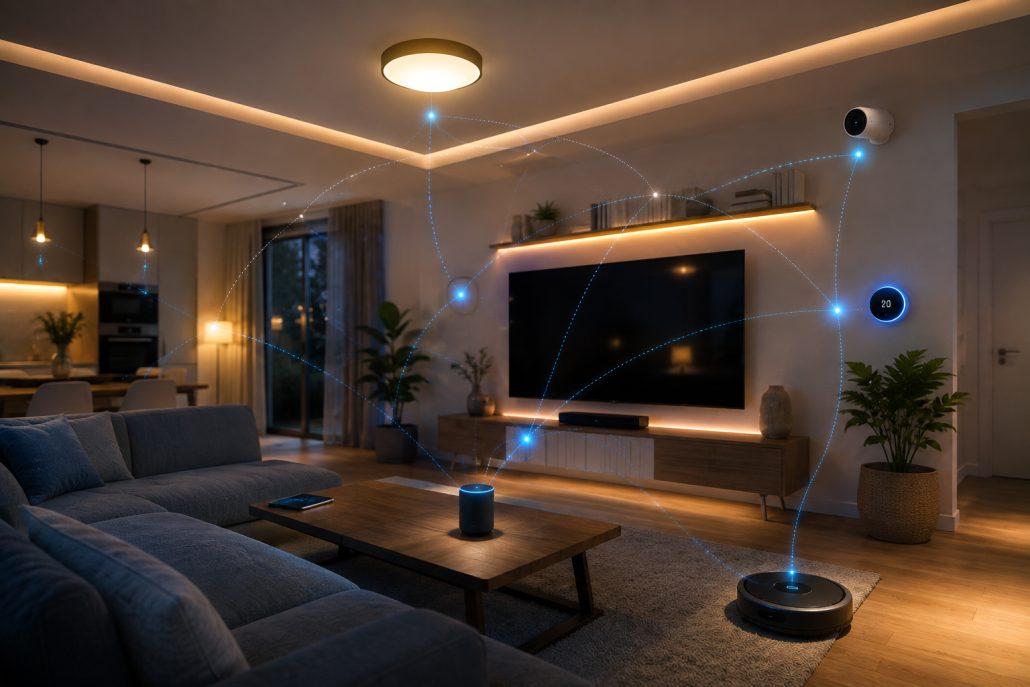
AI-powered smart home with interconnected thermostat, smart speaker, robot vacuum, lighting and security camera.
Research from Pew Research Center in 2026 found that around one-third of U.S. adults reported having a smart speaker, while AI-enabled doorbells, robot vacuums and thermostats were also present in consumers’ homes.
The next stage is greater coordination between devices. Instead of treating every appliance as a separate product, AI can connect information across the home. A smart home could potentially understand routines and adjust lighting, temperature, entertainment and security with less manual input.
AI is Transforming Wearables
Wearable technology is also becoming more intelligent. Smartwatches, earbuds and smart glasses are gaining AI capabilities that allow them to provide information without requiring users to constantly reach for a smartphone.
AI can make wearables more useful by understanding voice commands, summarizing notifications, translating conversations and providing contextual assistance. Smart glasses are particularly interesting because they can potentially deliver information through a hands-free interface.

A woman walking down a city street using connected AI wearable technology, including smart glasses, a smartwatch, and wireless earbuds.
However, the wearable market is still developing. Questions around privacy, battery life, comfort and whether consumers actually need always-on AI remain important. The technology may be improving quickly, but the industry has not yet established one universally accepted AI wearable experience.
AI is Changing How Consumers Shop
Artificial intelligence is also influencing what happens before consumers purchase a product.
Traditionally, shoppers searched websites, compared specifications, read reviews and eventually decided what to buy. AI is increasingly becoming part of that process.
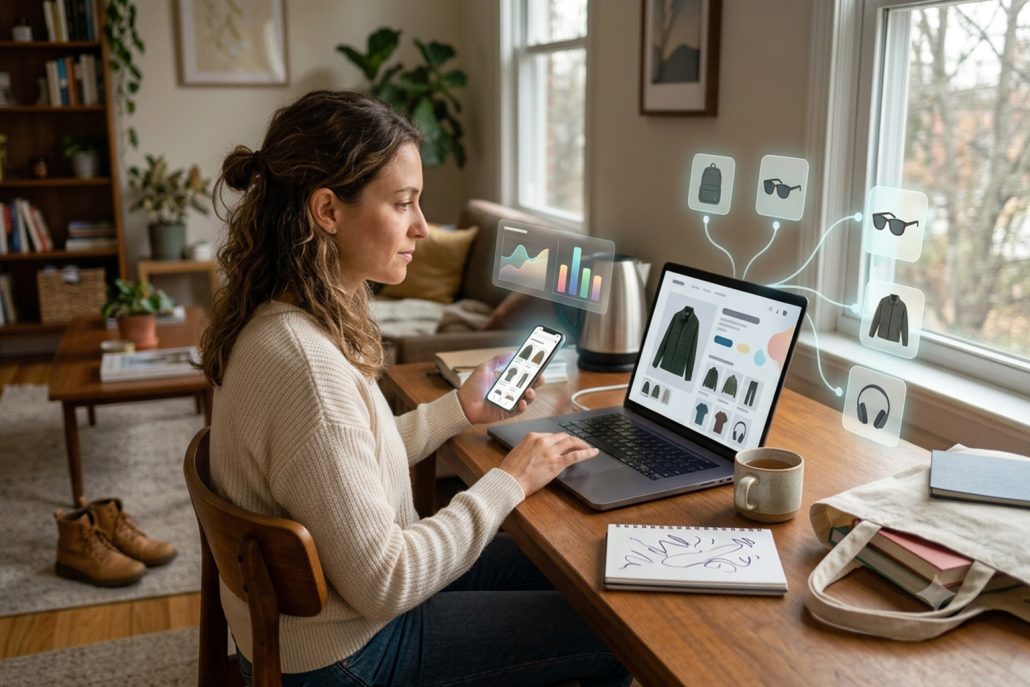
A woman at a desk using a laptop and phone, viewing augmented reality icons of a backpack, sunglasses, jacket, and headphones connected to her screen, along with floating data charts.
AI shopping assistants can summarize product information, compare options, identify relevant features and answer questions using natural language. Instead of searching for “best laptop under a particular budget,” consumers can describe what they actually need and receive recommendations based on their requirements.
This trend is already visible in India. Amazon reported that consumers were using AI-powered features such as Rufus, Lens AI, AI Review Highlights and Buying Guides for product discovery and purchasing decisions during its 2026 Great Summer Sale.
AI is therefore becoming not only a product feature but also a new way of discovering products.
Personalization is Becoming More Powerful
One of AI’s biggest advantages in consumer technology is personalization.
Traditional software generally offered the same interface and features to everyone. AI can adapt experiences according to individual preferences, habits and context.
Streaming services can improve recommendations. Smartphones can organize information more intelligently. Fitness devices can provide personalized insights. Shopping platforms can recommend products based on previous behaviour and current needs.
The result is technology that increasingly feels tailored to the individual user.
For consumers, this can reduce the amount of time spent searching, adjusting settings and performing repetitive tasks. The challenge, however, is ensuring that personalization does not become excessive surveillance.
AI is Moving From Cloud to Device
Another major development in 2026 is the growing importance of on-device AI.
Cloud-based AI remains extremely powerful, but running certain AI functions directly on smartphones, laptops and other devices can reduce latency and improve privacy. Qualcomm, for example, describes the current direction of AI as intelligence being built directly into smartphones, PCs, wearables, cars and other connected systems.
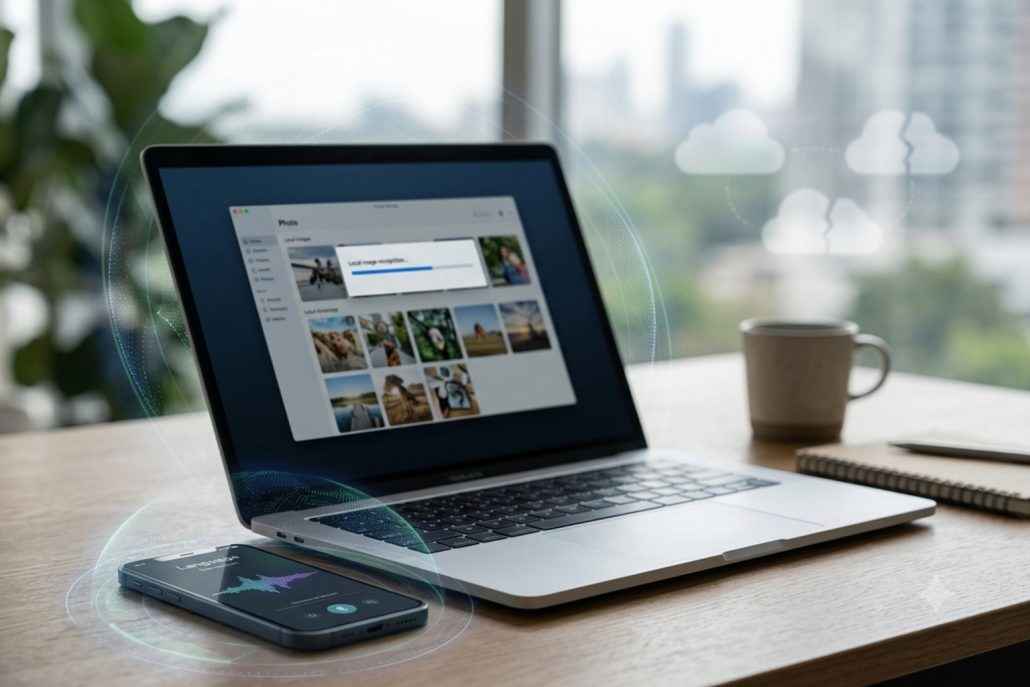
A close-up photograph on a wooden desk shows an open laptop displaying ‘Local image creation’ and a smartphone, both enveloped in glowing holographic network patterns.
This shift is also influencing hardware design. Manufacturers are investing in dedicated AI processors and more efficient chips capable of handling AI workloads.
As a result, consumers may increasingly judge devices not only by processor speed, camera quality or battery capacity, but also by their ability to perform AI tasks efficiently.
The Cost of AI-Enabled Technology
The AI revolution also has an unexpected consequence: consumer technology may not always become cheaper.
The enormous demand for AI infrastructure is increasing competition for memory, processors and other semiconductor components used in consumer devices. Recent reports have highlighted concerns that the AI boom is contributing to higher costs for smartphones and laptops in 2026.
This creates an interesting contrast. AI can make devices more capable and efficient, but the infrastructure required to deliver these capabilities can increase manufacturing costs.
Consumers may therefore face a market where AI features become standard while premium AI hardware remains expensive.
Privacy and Trust Matter More Than Ever
The rapid expansion of AI also creates important questions about privacy and control.
AI-powered devices can process voice recordings, images, location information, personal preferences and other sensitive data. The more context an AI system understands, the more useful it can become – but also the more important responsible data handling becomes.
Consumers will increasingly need to understand what information devices collect, where it is processed and how long it is retained. Manufacturers that provide clear controls and transparency are likely to have an advantage as users become more aware of these issues.
The Future of Consumer Technology is More Intelligent
Artificial intelligence is not simply adding another feature to consumer electronics. It is changing the relationship between people and technology.
In 2026, smartphones are becoming more context-aware, PCs are becoming AI-ready, smart homes are becoming more adaptive, wearables are becoming more capable and shopping platforms are becoming more conversational. Generative AI adoption is also expanding rapidly, with Forrester reporting that personal use cases currently lead professional applications among consumers.
The most important change may be that consumers will increasingly interact with technology through intent rather than individual commands. Instead of asking which application to open, users may simply explain what they want to accomplish.
That does not mean traditional devices are disappearing. Smartphones, laptops and appliances will remain important. What is changing is the intelligence built into them.
As AI continues to mature, the best consumer technology may no longer be the device with the longest specification sheet. It may be the device that understands the user, reduces friction and quietly makes everyday tasks easier.
In that sense, artificial intelligence is changing consumer technology in 2026 by making technology more personal, proactive and responsive – and this transformation is only beginning.