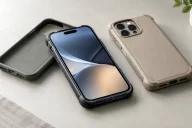
Military-Grade Phone Cases Explained: What the Rating Really Means
Smartphones have become essential for communication, photography, navigation, work, and entertainment. However, their slim designs and large glass displays can make them vulnerable to accidental drops, bumps, and everyday wear. A single fall onto a hard surface can damage a screen, crack a camera lens, or affect internal components. This is why many smartphone users consider military-grade phone cases for additional protection.
Table of Contents
- What is a Military-Grade Phone Case?
- What Does MIL-STD-810H Mean?
- How Do Military-Grade Phone Cases Protect Smartphones?
- Military-Grade vs. Regular Phone Cases
- Military-Grade Phone Cases vs. Waterproof Cases
- Important Features to Look for Before Buying
- Are Military-Grade Phone Cases Worth Buying?
- Common Myths About Military-Grade Phone Cases
- Final Thoughts
- Frequently Asked Questions
But what does military-grade protection actually mean? Does it guarantee that a phone will survive every fall, or is it simply a marketing term used by case manufacturers?
Understanding military-grade phone cases can help you choose the right protective accessory for your device, lifestyle, and budget.
What is a Military-Grade Phone Case?
A military-grade phone case is a protective smartphone cover designed and tested to meet specific durability requirements associated with military environmental testing standards. These cases typically focus on protecting phones against accidental drops, impacts, vibration, and other physical stresses.

A rugged smartphone case beside a compatible phone showing its reinforced corners, flexible inner lining, and rigid protective outer shell.
Many manufacturers use the term military-grade to describe cases tested according to MIL-STD-810G or MIL-STD-810H, standards developed for evaluating equipment under environmental conditions.
These standards cover different types of environmental stress, including temperature changes, humidity, vibration, and mechanical shock. A phone case manufacturer may use selected test procedures to assess how well its product protects a smartphone during drops.
However, military-grade does not automatically mean that a phone case has passed every test included in these standards. Testing conditions, drop heights, surfaces, sample sizes, and evaluation methods can vary between manufacturers.
The most useful approach is to look beyond the military-grade label and examine the specific protection claims supported by testing.
What Does MIL-STD-810H Mean?
MIL-STD-810H is a United States military environmental engineering standard that outlines methods for evaluating equipment under different environmental stresses. It is commonly mentioned in product descriptions for rugged smartphones, outdoor electronics, and protective phone cases.

A rugged smartphone in a protective case positioned in a laboratory setup for controlled drop-resistance testing.
Its drop-related procedure is known as Method 516.8, which addresses shock testing. Depending on the product and testing plan, evaluations may involve repeated drops or other forms of mechanical shock.
For phone cases, manufacturers may conduct drop tests using a smartphone or a representative device inside the case. The objective is to determine whether the case helps protect the device under the specified conditions.
However, there are several important details to understand.
Military-grade is not a universal certification for phone cases. The standard provides testing methods rather than a single pass-or-fail rating that applies to every case.
MIL-STD-810H does not guarantee complete protection. A phone can still break after a fall, particularly if it lands on a vulnerable corner, a protruding camera, or an uneven surface.
Test conditions matter. A case tested through repeated drops onto a particular surface may perform differently when dropped onto concrete, gravel, or sharp objects.
When comparing cases, check whether the manufacturer identifies the applicable standard, drop height, number of drops, test surface, and testing conditions.
How Do Military-Grade Phone Cases Protect Smartphones?
Military-grade phone cases generally combine several protective design features to reduce the impact of everyday accidents.
Shock-Absorbing Materials
Flexible materials such as thermoplastic polyurethane (TPU) are commonly used in rugged phone cases because they can absorb and distribute some impact energy.
When a phone falls, the case helps reduce the force transferred directly to the device. The effectiveness depends on material thickness, flexibility, internal structure, and overall case design.
Some cases combine flexible TPU with a harder polycarbonate outer shell. This construction balances shock absorption with resistance to scratches and deformation.

Close-up of a rugged phone case showing flexible shock-absorbing bumpers, reinforced corners, and a textured protective surface.
Reinforced Corners
Smartphone corners are particularly vulnerable during accidental drops. Many rugged cases use reinforced corners, thicker bumpers, or air-pocket structures to help manage impact forces.
These features can reduce the risk of damage when a phone lands on a corner, although protection varies according to the design and impact conditions.
Raised Screen Edges
A raised lip around the display helps prevent the screen from directly contacting flat surfaces when the phone lands face down.
This feature is particularly useful for protecting the display against scratches and certain types of impact. However, raised edges cannot guarantee screen safety on uneven surfaces or during direct impacts.
Camera Protection
Modern smartphones often feature large camera modules that extend beyond the back panel. A protective case may include a raised camera surround to reduce contact with desks, floors, and other surfaces.
Some designs also incorporate separate lens covers. These can provide additional protection, but users should check image quality, compatibility, and ease of cleaning before choosing a case with integrated camera covers.
Secure Grip and Structural Support
Textured sides, non-slip finishes, and reinforced frames help users hold their phones securely. A better grip may reduce the likelihood of accidental drops in the first place.
Together, these features make a well-designed rugged phone case useful for daily commuting, travel, outdoor activities, and demanding work environments.
Military-Grade vs. Regular Phone Cases
The main difference between military-grade phone cases and standard cases is their intended level of physical protection.
Regular phone cases typically prioritize appearance, slimness, and basic scratch protection. They may offer some drop resistance, but their construction is not always optimized for repeated impacts.

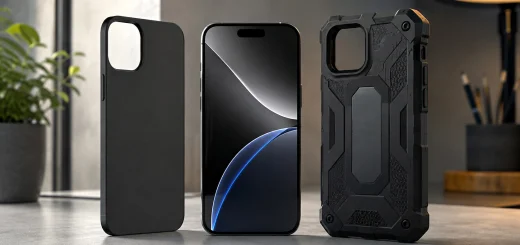
A slim smartphone case and a rugged military-grade case displayed side by side to compare their thickness and protective construction.
Military-grade cases generally place greater emphasis on reinforced corners, shock-absorbing materials, protective edges, and durability testing.
Slim cases are often more comfortable to carry and may preserve the original design of a smartphone. Rugged cases tend to be thicker and heavier because they use additional protective structures.
Neither category is automatically superior for every user. Someone who primarily uses a phone at home or in an office may find a slim case sufficient. Someone who frequently hikes, travels, works outdoors, or handles equipment in demanding environments may benefit from a rugged design.
The best choice depends on the balance between protection, portability, comfort, and price.
Military-Grade Phone Cases vs. Waterproof Cases
Military-grade protection and waterproof protection are not the same thing.
A military-grade phone case primarily focuses on physical durability, such as reducing damage from drops and impacts. A waterproof case is designed to limit water entry under specified conditions.
Some rugged cases offer water resistance, dust protection, or sealed ports, but these features should not be assumed simply because a product carries a military-grade claim.
If you regularly use your phone around swimming pools, during kayaking, or in heavy rain, look for clearly stated water-protection specifications. Check the conditions and limitations of any advertised IP rating, including immersion depth and duration where applicable.
For demanding outdoor activities, a case that combines verified drop protection with appropriate water resistance may provide more comprehensive protection than a military-grade case alone.

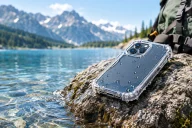
A smartphone in a rugged protective case resting on a damp rock beside a forest hiking trail with outdoor gear in the background.
Important Features to Look for Before Buying
Choosing the right military-grade phone case involves more than checking the product title. Several practical features can influence its effectiveness and usability.
Verified drop-test details: Look for specific information about drop height, number of drops, and test conditions instead of relying exclusively on promotional claims.
Device-specific fit: A case should fit your exact smartphone model. Incorrect cutouts or loose construction can interfere with buttons, charging ports, speakers, and camera performance.
Raised display and camera edges: These features help reduce direct contact between vulnerable surfaces and flat objects.
Quality materials: TPU, polycarbonate, and carefully designed combinations of flexible and rigid materials are common in protective cases.
Comfortable grip: Textured sides and non-slip finishes can improve handling without making the phone difficult to remove from a pocket.
Wireless charging compatibility: Thick cases and certain metallic components can interfere with wireless charging or magnetic accessories. Check compatibility before purchasing.
Practical bulk and weight: Consider whether the case fits comfortably in your pocket and whether you can operate the phone easily with one hand.
Warranty and replacement support: A clear warranty policy and accessible customer support can be useful if the case develops defects or fails prematurely.
Are Military-Grade Phone Cases Worth Buying?
Military-grade phone cases can be worth buying if you want additional protection against accidental drops and everyday impacts.
They are particularly useful for people who work at construction sites, travel frequently, participate in outdoor activities, or regularly use their phones in environments where drops are more likely.
For these users, reinforced corners, shock-absorbing materials, raised edges, and a secure grip can help reduce the risk of expensive smartphone repairs.
However, the military-grade label alone does not establish the quality of a case. A poorly designed product can advertise a testing standard without providing the same level of practical protection as a carefully engineered alternative.
Consider your phone’s value, replacement cost, typical environment, and handling habits. If you rarely drop your device, a lighter protective case may be sufficient. If your phone regularly faces physical hazards, investing in a rugged case with transparent testing information may be a sensible decision.
Remember that even the strongest phone case cannot make a smartphone indestructible. Screen protectors, careful handling, and appropriate accessories can provide additional safeguards.
Common Myths About Military-Grade Phone Cases
Several misconceptions can lead buyers to expect more protection than a case can realistically provide.
Myth: Military-grade cases are indestructible. No case can eliminate every risk of damage. Drop angle, surface hardness, impact force, and device design all influence the outcome.
Myth: Every military-grade case passes identical tests. Manufacturers may use different test conditions and procedures, so individual claims should be evaluated separately.
Myth: Military-grade automatically means waterproof. Drop protection and water resistance are distinct capabilities that require separate evidence.
Myth: A thicker case always offers better protection. Thickness alone does not determine performance. Material quality, impact-absorbing structures, fit, and engineering are also important.
Understanding these distinctions helps you make a more informed purchasing decision and avoid paying extra for claims that do not match your needs.
Final Thoughts
Military-grade phone cases offer an additional layer of protection through shock-absorbing materials, reinforced corners, raised edges, and rugged construction. When supported by meaningful drop-test information, these features can help reduce the risk of smartphone damage during everyday accidents.
However, the term military-grade should be treated as a starting point rather than a guarantee of durability. MIL-STD-810H describes environmental testing methods, and the protection provided by an individual case depends on the procedures used, its design, and the conditions of an actual impact.
Before purchasing, compare the manufacturer’s testing details, device compatibility, materials, grip, camera protection, and overall usability.
Ultimately, the best military-grade phone case is one that offers credible protection for your daily activities without adding unnecessary bulk or compromising the features you use most. Choosing carefully can help extend your smartphone’s usable life and provide greater confidence when using it at work, at home, or outdoors.
Frequently Asked Questions
What does military-grade mean on a phone case?
It generally indicates that a case has been designed or tested against selected military environmental testing procedures, often involving drop or shock resistance. The exact testing conditions depend on the manufacturer.
Is MIL-STD-810H better than MIL-STD-810G?
MIL-STD-810H is a later revision of the standard than MIL-STD-810G. However, the revision alone does not prove that one phone case offers better protection than another. Actual test procedures and results matter.
Can a military-grade phone case prevent a cracked screen?
It can reduce the risk of screen damage by absorbing impact and raising the display above flat surfaces. However, no case can guarantee that a screen will remain intact after every drop.
Do military-grade phone cases protect against water?
Not necessarily. Water resistance must be supported by separate specifications or testing. Look for clearly defined water-protection claims if you need protection against rain, splashes, or immersion.
Are military-grade phone cases bulky?
Many rugged cases are thicker and heavier than standard cases, although slim protective designs are also available. Compare dimensions, weight, grip, and protection features to find the right balance for your needs.