Exploring the Benefits of Multiple Lenses in Smartphone Cameras
Smartphone cameras have evolved dramatically over the past decade. What was once a single rear camera has now transformed into advanced multi-camera systems featuring wide, ultra-wide, telephoto, macro, and depth sensors. These multiple lenses enable users to capture professional-quality photos and videos without carrying a dedicated camera.
Table of Contents
- Why Modern Smartphones Use Multiple Camera Lenses
- Wide-Angle Lens: The Everyday Camera
- Ultra-Wide Lens Expands Your Perspective
- Telephoto Lens Delivers True Optical Zoom
- Periscope Cameras Bring Long-Range Photography
- Macro Lens Reveals Tiny Details
- Depth Sensor Improves Portrait Photography
- Better Low-Light Photography
- Improved Portrait Photography
- Better Video Recording
- More Creative Photography Options
- AI Makes Multiple Lenses Even Smarter
- Better Computational Photography
- Useful for Content Creators
- Choosing a Smartphone with Multiple Lenses
- The Future of Multi-Lens Smartphone Cameras
- Conclusion
Exploring the Benefits of Multiple Lenses in Smartphone Cameras helps users understand why modern smartphones deliver better image quality, greater flexibility, and more creative possibilities than ever before. Whether you’re a casual photographer, content creator, or mobile photography enthusiast, knowing how each lens works can help you get the most from your smartphone camera.
Why Modern Smartphones Use Multiple Camera Lenses
A single camera lens has physical limitations. It cannot provide every focal length or photography style while maintaining excellent image quality. Instead of relying entirely on digital zoom or software tricks, smartphone manufacturers add multiple specialized lenses. Each lens serves a different purpose, allowing users to switch perspectives instantly.
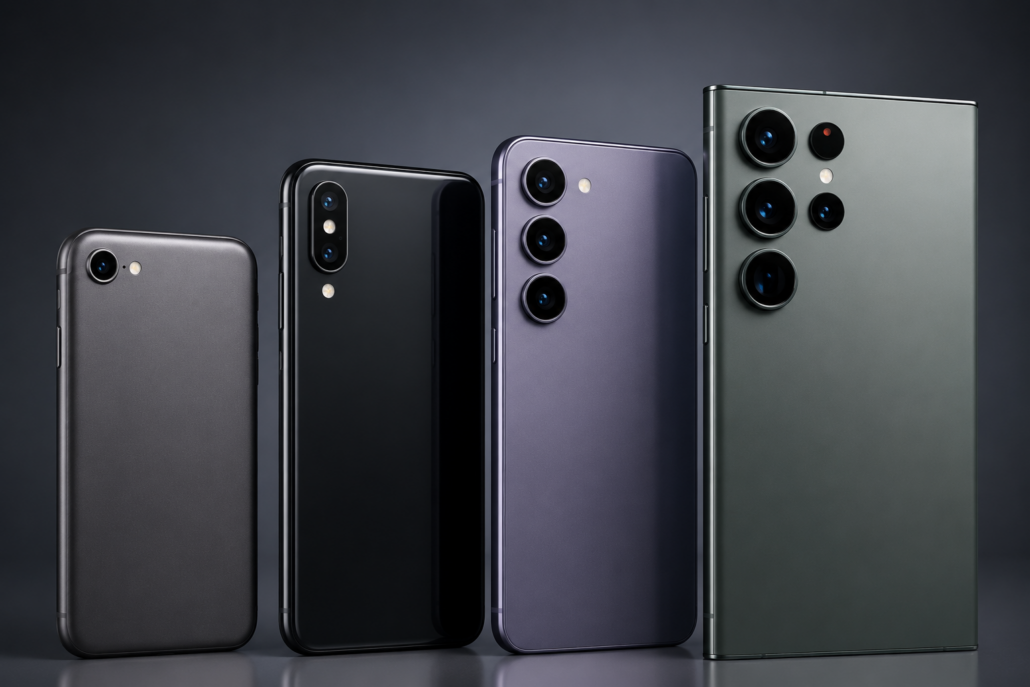
Comparison of smartphones featuring single, dual, triple, and quad-camera systems, illustrating the evolution of smartphone camera technology and multi-lens innovations.
This combination creates a versatile camera system capable of handling various photography scenarios. Common advantages include:
- Better image quality
- Improved zoom capabilities
- Wider field of view
- Enhanced portrait photography
- More creative shooting options
- Superior low-light performance
Wide-Angle Lens: The Everyday Camera
The primary wide-angle camera is the lens most people use every day. It typically features the largest image sensor and the widest aperture, allowing it to capture more light than the other cameras. This lens performs well for:
- Daily photography
- Family portraits
- Street photography
- Food photography
- Indoor shots
- Social media content
Because it gathers more light, the primary lens often produces the sharpest and brightest images, especially in challenging lighting conditions.
Ultra-Wide Lens Expands Your Perspective
Ultra-wide lenses have become one of the most popular additions to smartphone cameras. These lenses capture a much larger scene than the main camera, making them ideal when you cannot physically move farther away.

Side-by-side comparison of a landscape captured with a standard wide smartphone camera lens and an ultra-wide lens, showing the difference in field of view and scene coverage.
Perfect situations include:
- Landscapes
- Mountains
- Beaches
- Architecture
- Group photos
- Interior photography
- Travel photography
Ultra-wide lenses create dramatic compositions that make scenes feel more immersive. Many content creators also use them for action shots and travel videos.
Telephoto Lens Delivers True Optical Zoom
Digital zoom simply crops the image, reducing quality. A dedicated telephoto lens provides optical zoom, allowing you to get closer without sacrificing image sharpness.

Side-by-side comparison of a distant building captured using digital zoom and optical telephoto zoom on a smartphone camera, highlighting differences in image sharpness, detail, and clarity.
Depending on the smartphone, telephoto cameras may offer:
- 2x optical zoom
- 3x optical zoom
- 5x optical zoom
- 10x periscope zoom
- Hybrid zoom systems
This lens is especially useful for:
- Wildlife
- Sports
- Concerts
- Stage performances
- Portrait photography
- Travel photography
Optical zoom preserves fine details that digital zoom often loses.
Periscope Cameras Bring Long-Range Photography
Premium smartphones now include periscope telephoto lenses. Instead of placing the lens vertically, manufacturers use mirrors or prisms to bend light sideways inside the phone. This innovative design allows significantly longer focal lengths without increasing the phone’s thickness. Benefits include:
- Better long-distance photography
- Sharper zoomed images
- Improved image stabilization
- Higher-quality hybrid zoom
Periscope lenses have made smartphones capable of capturing distant subjects with remarkable clarity.
Macro Lens Reveals Tiny Details
Macro lenses allow users to photograph subjects from extremely close distances. They reveal details that are difficult to see with the naked eye.

Extreme close-up of a flower with water droplets captured using a smartphone macro lens, highlighting intricate textures, fine details, and sharp focus.
Popular macro photography subjects include:
- Flowers
- Insects
- Jewelry
- Water droplets
- Textures
- Coins
- Food details
Although dedicated macro cameras vary in quality, high-end smartphones often produce surprisingly detailed close-up photographs.
Depth Sensor Improves Portrait Photography
Some smartphones include dedicated depth sensors. These sensors help measure the distance between the camera and the subject. The information improves portrait mode by separating the subject from the background more accurately. Benefits include:
- Natural background blur
- Better edge detection
- Improved subject isolation
- More realistic bokeh effects
Many newer smartphones now achieve similar results using AI and computational photography without requiring a dedicated depth sensor.
Better Low-Light Photography
Multiple lenses work together with advanced software to improve nighttime photography. The camera combines data from multiple sensors while using artificial intelligence to reduce noise and preserve details.
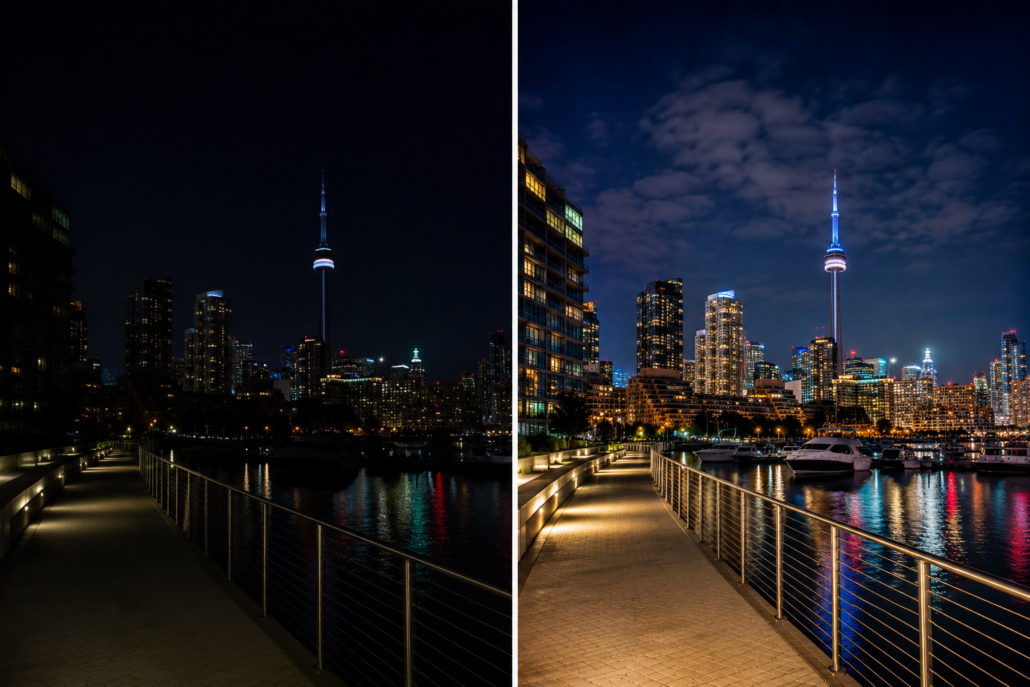
Side-by-side nighttime cityscape comparing an older smartphone camera with a modern multi-lens smartphone using AI Night Mode, showing brighter images, reduced noise, and improved detail.
Night photography benefits include:
- Brighter images
- Reduced image noise
- Improved color accuracy
- Better shadow detail
- Enhanced dynamic range
Flagship smartphones can now capture impressive night scenes that rival dedicated cameras in many situations.
Improved Portrait Photography
Portrait photography has become one of the biggest reasons people appreciate multiple camera systems. Telephoto lenses create more natural facial proportions than wide-angle cameras. Meanwhile, depth information allows smartphones to simulate the shallow depth of field found in DSLR cameras. Modern portrait modes also offer:
- Studio lighting effects
- Adjustable blur intensity
- AI background replacement
- Portrait video modes
- Edge refinement
These features help users capture professional-looking portraits with minimal effort.
Better Video Recording
Multiple lenses aren’t just useful for photography. They also enhance video recording. Users can switch between lenses while filming to create cinematic perspectives without changing equipment. Benefits include:
- Smooth zoom transitions
- Ultra-wide action shots
- Stabilized telephoto videos
- Better subject tracking
- Professional storytelling
Many flagship smartphones even support switching lenses during 4K recording.
More Creative Photography Options
Each lens offers a unique perspective. Instead of taking similar-looking photos every time, users can experiment with different compositions.
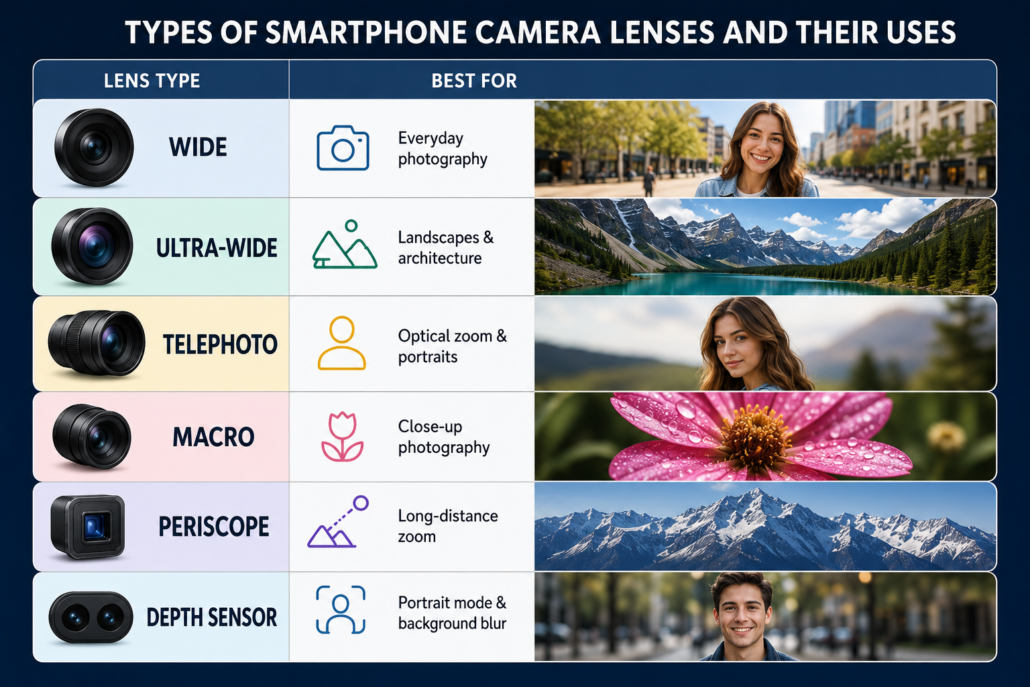
Infographic showing the main types of smartphone camera lenses, including wide, ultra-wide, telephoto, macro, periscope, and depth sensor, with their best photography uses and applications.
For example:
- Use ultra-wide for dramatic landscapes.
- Use telephoto for distant subjects.
- Use macro for tiny details.
- Use the main lens for everyday photography.
This creative flexibility encourages users to improve their photography skills.
AI Makes Multiple Lenses Even Smarter
Modern smartphone cameras rely heavily on artificial intelligence. AI automatically selects the best lens depending on the scene and optimizes settings in real time. AI features include:
- Scene recognition
- Automatic HDR
- Smart exposure
- Facial enhancement
- Motion detection
- Night mode optimization
- Sky enhancement
These software improvements work alongside multiple lenses to produce consistently impressive images.
Better Computational Photography
Computational photography combines images from multiple cameras into a single high-quality photo. Instead of relying only on hardware, smartphones use advanced processing to improve every image. Benefits include:
- Higher dynamic range
- Better sharpness
- Reduced noise
- Improved colors
- Enhanced textures
- More accurate white balance
This technology allows smartphones to compete with much larger cameras in many everyday situations.
Useful for Content Creators
Content creators benefit significantly from multiple smartphone lenses. Different perspectives make videos and photos more engaging across platforms like YouTube, Instagram, TikTok, and Facebook. Creators can quickly switch between:
- Vlogs
- Product reviews
- Travel videos
- Food photography
- Close-up demonstrations
- Cinematic B-roll
This versatility reduces the need for extra camera equipment.
Choosing a Smartphone with Multiple Lenses
When buying a smartphone, don’t focus only on the number of cameras. Instead, consider the overall quality of the camera system. Important factors include:
- Sensor size
- Lens quality
- Optical image stabilization
- Telephoto capability
- Ultra-wide performance
- Low-light photography
- Video recording features
- AI image processing
A well-designed triple-camera setup often outperforms a phone with four or five lower-quality cameras.
The Future of Multi-Lens Smartphone Cameras
Smartphone camera technology continues to evolve rapidly. Future innovations may include larger sensors, variable aperture lenses, improved periscope zoom, AI-assisted photography, and more advanced computational imaging. Manufacturers are also exploring continuous optical zoom systems, enhanced low-light capabilities, and professional-grade video features. These advancements will make smartphones even more powerful tools for photography and content creation.
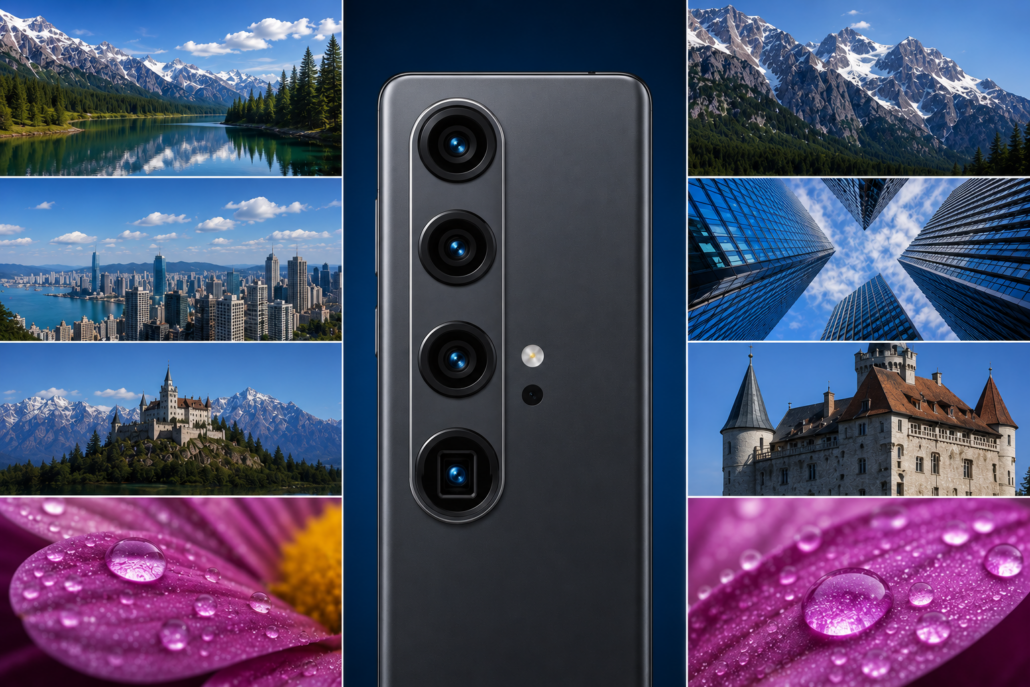
Modern flagship smartphone with a multi-lens camera system surrounded by sample photos showcasing wide-angle, ultra-wide, telephoto, and macro photography capabilities.
Conclusion
Exploring the Benefits of Multiple Lenses in Smartphone Cameras shows how far mobile photography has advanced. Modern multi-lens systems provide flexibility, better image quality, optical zoom, enhanced portraits, improved low-light performance, and creative shooting options that were once available only in dedicated cameras. Rather than simply increasing the number of cameras, today’s leading smartphone manufacturers focus on combining specialized lenses with powerful AI and computational photography. The result is a versatile camera system capable of capturing stunning photos and videos in almost any situation. As smartphone technology continues to improve, multiple camera lenses will remain one of the most valuable features for anyone who wants to capture life’s moments with exceptional quality.