Rugged vs Slim Phone Cases: Which One Should You Buy?
Rugged vs slim phone cases is a common debate for smartphone users. A phone case needs to protect an expensive device, but it should also feel comfortable in everyday use. Rugged cases offer stronger protection and reinforced construction, while slim cases focus on maintaining the phone’s original shape, lightweight feel, and appearance.
Choosing between them is not simply about deciding whether you want more or less protection. It depends on how you use your smartphone, where you carry it, how often you drop it, and how much additional bulk you are willing to accept.
With modern smartphones featuring large displays, glass backs, sophisticated camera systems, and premium finishes, the right case can make a significant difference. So, should you buy a rugged case or a slim phone case? Let’s compare both options.
Table of Contents
- What is a Slim Phone Case?
- What is a Rugged Phone Case?
- Rugged vs Slim Phone Cases: Key Differences
- Protection: Rugged Cases Have the Advantage
- Design and Appearance: Slim Cases Win
- Comfort and Portability
- Grip: Don’t Ignore This Feature
- Wireless Charging and Accessories
- Durability and Everyday Use
- Rugged vs Slim Phone Cases: Which is Better for Different Users?
- Is There a Middle Ground?
- What Should You Check Before Buying?
- Rugged vs Slim Phone Cases: The Final Verdict
What is a Slim Phone Case?
A slim phone case is designed to provide everyday protection without significantly increasing the size or weight of a smartphone. These cases typically have a minimalist design and use materials such as TPU, silicone, polycarbonate, or other lightweight materials.
The main attraction of a slim case is that it allows you to retain much of the original feel of your smartphone. It is easier to slide into a pocket, comfortable to hold for extended periods, and generally less noticeable when carrying the phone.

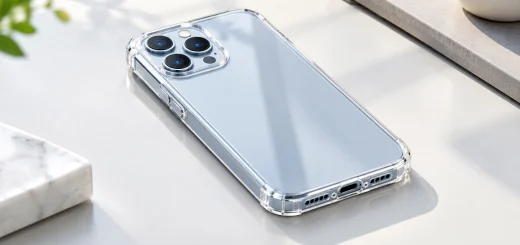
Smartphone fitted with a slim minimalist phone case showing its lightweight design and smooth edges in a hand.
Slim cases are particularly suitable for users who primarily want protection against scratches, scuffs, minor bumps, and everyday wear.
However, slim construction means there is generally less material available to absorb energy during a serious impact. A thin case may therefore provide less protection against major drops than a heavily reinforced rugged case.
What is a Rugged Phone Case?
A rugged phone case is designed with protection as its primary objective. It generally uses thicker construction, reinforced corners, raised edges, and shock-absorbing materials to protect the smartphone against stronger impacts.
Many rugged cases use multiple layers, combining flexible materials with a harder outer shell. Some also include additional features such as port covers, textured grips, kickstands, camera protection, or built-in screen protection.

Rugged phone case on a rock outdoors showing reinforced corners, raised edges, textured grip, and durable smartphone protection.
The major advantage is greater protection during demanding use. If your phone regularly travels outdoors, goes on hikes, is used at a construction site, or is frequently dropped, a rugged case can provide greater peace of mind.
The trade-off is increased thickness and weight. Your smartphone may feel noticeably larger compared with its original design.
Rugged vs Slim Phone Cases: Key Differences
The simplest way to understand the rugged vs slim phone cases comparison is to look at the priorities of each design.
Slim phone cases prioritize:
- Lightweight construction
- Minimal bulk
- Pocket-friendly design
- Original phone aesthetics
- Comfortable everyday handling
- Basic protection against scratches and minor impacts
Rugged phone cases prioritize:
- Stronger impact protection
- Reinforced corners and edges
- Shock absorption
- Better protection for demanding environments
- Increased grip
- Long-term durability
Neither design is automatically better. The better choice depends on your personal requirements.

Side-by-side product comparison of two identical black smartphones lying on a neutral surface: one fitted with a minimalist slim case and the other with a heavy-duty, thick rugged case showcasing their different levels of protection and profile thickness.
Protection: Rugged Cases Have the Advantage
If protection is your number-one priority, a rugged case is generally the safer choice.
The corners of a smartphone are particularly important during drops because impacts often occur along the edges. Rugged cases commonly use reinforced corners and thicker shock-absorbing sections to help distribute impact forces.
Raised bezels can also help keep the display and camera lenses slightly away from flat surfaces when the phone is placed face down or camera-side down.

A detailed photograph of a modern smartphone encased in a heavy-duty, grey and black rugged armor protective cover. The phone is angled, balancing on its corner on a rough, textured concrete floor, demonstrating impact resistance.
Slim cases can still provide useful protection. A quality slim case with raised edges and reinforced corners can protect against many everyday accidents. However, it typically cannot provide the same level of impact absorption as a thicker, multi-layer rugged case.
For users who frequently drop their phones, rugged cases make more sense.
Design and Appearance: Slim Cases Win
Modern smartphones are designed to look premium. Many users choose a particular phone because of its color, finish, camera design, and thin profile.
A bulky case can hide much of that design.
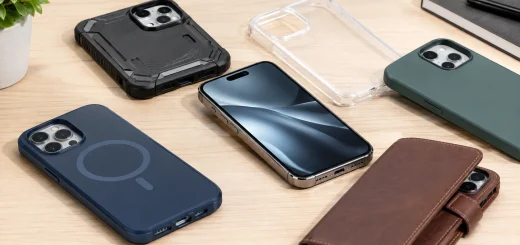
Slim cases are better suited to users who want their smartphone to remain visually close to its original appearance. Clear, transparent, matte, leather-style, and minimalist cases can add protection without dramatically changing the phone’s profile.
Rugged cases tend to have a more industrial appearance. Their larger corners, textured surfaces, and reinforced frames can make a smartphone look tougher but less elegant.
If aesthetics are important to you, a slim case is usually the better choice.
Comfort and Portability
Your phone is probably in your hand or pocket several times every day. That makes comfort an important consideration.
Slim cases add relatively little thickness, making them easier to carry in jeans pockets, small bags, and jacket pockets. They also tend to feel more natural during activities such as typing, browsing, gaming, and watching videos.

Slim phone case showing comfortable pocket-friendly smartphone design.
Rugged cases can make the phone considerably thicker. Some users appreciate the additional grip, while others find the extra size inconvenient.
If you spend most of your day carrying your smartphone in a pocket, the reduced bulk of a slim case can become a major advantage.
Grip: Don’t Ignore This Feature
A good phone case should not only protect the smartphone after a fall. It should also help prevent the fall in the first place.
Some slim phones have smooth glass or metal surfaces that can become slippery. A case with a textured or soft-touch finish can improve grip without requiring a bulky design.
Rugged cases often have more aggressive textures and larger side grips. This can make them easier to hold securely during outdoor activities or movement.
However, not every rugged case automatically has better grip. The actual material and surface design matter.
When comparing cases, look beyond thickness and check how the sides feel in your hand.
Wireless Charging and Accessories
Another consideration is compatibility with your existing accessories.
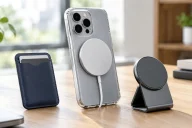
A very thick case can sometimes affect the convenience of wireless charging or magnetic accessories, depending on the case design and charging system. Slim cases generally create fewer obstacles because there is less material between the smartphone and the charger.
If you regularly use wireless charging, magnetic mounts, wallets, stands, or other accessories, check whether the case specifically supports them before purchasing.
Compatibility is particularly important for phones that rely heavily on magnetic accessory ecosystems.
Durability and Everyday Use
Rugged cases generally have an advantage when it comes to surviving demanding environments. Their thicker construction is designed to handle more abuse than a minimalist case.
Consider where you use your phone.
If it stays mostly at home, in an office, or in a controlled environment, you may not need a heavy-duty case. A slim case can provide enough protection while keeping the phone comfortable.
If you work outdoors, travel frequently, participate in outdoor activities, or regularly place your phone in environments where drops are more likely, rugged protection becomes more valuable.
The best case is therefore not necessarily the strongest case. It is the case that matches your actual environment.
Rugged vs Slim Phone Cases: Which is Better for Different Users?
For Office Professionals
A slim case is usually the better choice. Office environments generally present fewer serious impact risks, while portability and appearance may be more important.
For Students
Both options can work. Students who frequently carry their phones in crowded bags or tend to drop them may benefit from a rugged case. Those who prioritize a lightweight design can choose a protective slim case.
For Outdoor Users
Rugged cases are the clear choice for hiking, cycling, construction work, travel, and other demanding environments. The additional protection is often worth the extra bulk.
For Frequent Travelers
A rugged or hybrid case can be useful because travel exposes smartphones to more situations than normal daily use. Bags, crowded transport, outdoor activities, and accidental drops can increase the risk of damage.
For Minimalists
Slim cases are ideal for users who dislike bulky accessories and want to preserve the original design and feel of their smartphone.
For People Who Drop Their Phones Often
Choose a rugged case. If you already know that your phone frequently slips from your hand, pocket, or table, additional protection is worth prioritizing.
Is There a Middle Ground?
Yes. Hybrid phone cases offer a useful compromise between slim and rugged designs.
These cases often combine a relatively thin profile with reinforced corners, raised edges, and shock-absorbing materials. They may not provide the maximum protection of a heavy-duty rugged case, but they can offer more protection than a basic slim cover without making the phone excessively bulky.

Hybrid phone case combining slim design with rugged smartphone protection.
For many everyday users, this middle ground can be the most practical solution.
What Should You Check Before Buying?
Before purchasing a phone case, consider these factors:
- Drop protection: Look for meaningful protection features rather than relying only on marketing terms.
- Raised edges: A raised lip around the display and cameras can provide additional protection.
- Corner reinforcement: Reinforced corners are especially useful for drop protection.
- Grip: Choose a surface that feels secure in your hand.
- Thickness: Make sure the case is not unnecessarily bulky for your needs.
- Weight: A heavy case can change the overall experience of using the phone.
- Charging compatibility: Check compatibility with wireless and magnetic charging systems.
- Button quality: Buttons should remain easy to press after the case is installed.
- Port access: Charging ports and speakers should remain unobstructed.
- Material quality: Durable materials can make a major difference in long-term use.
Rugged vs Slim Phone Cases: The Final Verdict
The rugged vs slim phone cases decision ultimately comes down to protection versus portability.
Choose a slim phone case if you want a lightweight, stylish case that maintains the original feel of your smartphone while providing protection against everyday scratches, bumps, and minor drops.
Choose a rugged phone case if maximum protection matters more than size and weight. It is the better option for frequent travelers, outdoor users, active lifestyles, demanding workplaces, and anyone who regularly drops their phone.
If you want a balance between both approaches, consider a hybrid case with reinforced corners and shock absorption while maintaining a relatively slim profile.
There is no single phone case that is perfect for everyone. The best choice is the one that matches your lifestyle. Think about where your phone spends most of its time, how you normally carry it, and how much protection you realistically need. Once you understand those priorities, choosing between a rugged and slim phone case becomes much easier.