How to Choose the Right Phone Case for Your Device
Smartphones have become an essential part of everyday life, helping us stay connected, work efficiently, capture memories, and enjoy entertainment on the go. However, these devices can be vulnerable to accidental drops, scratches, dust, and everyday wear. Choosing the right phone case is one of the simplest ways to protect your investment while adding a personal touch to your device.
Table of Contents
- Check Your Smartphone Model and Compatibility
- Choose the Right Level of Protection
- Understand Different Phone Case Materials
- Consider the Size, Weight, and Grip
- Look for Raised Edges and Camera Protection
- Decide Whether You Need Extra Features
- Balance Style With Practicality
- Check Quality, Price, and Durability
- Match Your Phone Case to Your Lifestyle
- Final Thoughts
With countless options available, finding the perfect case can be challenging. Some cases prioritize drop protection, while others focus on slim designs, premium materials, or additional functionality. The best choice depends on your smartphone model, lifestyle, preferred design, and level of protection required.
Understanding the different types of phone cases and their features can help you make an informed decision. Here is how to choose the right phone case for your device without compromising on protection, comfort, or style.
Check Your Smartphone Model and Compatibility
Before exploring different phone case designs, confirm the exact model of your smartphone. Even devices from the same manufacturer can have different dimensions, camera placements, button positions, and charging port layouts.
A case designed for a similar-looking phone may not fit correctly. It could cover part of the camera, interfere with the buttons, or prevent you from accessing charging ports and other features.
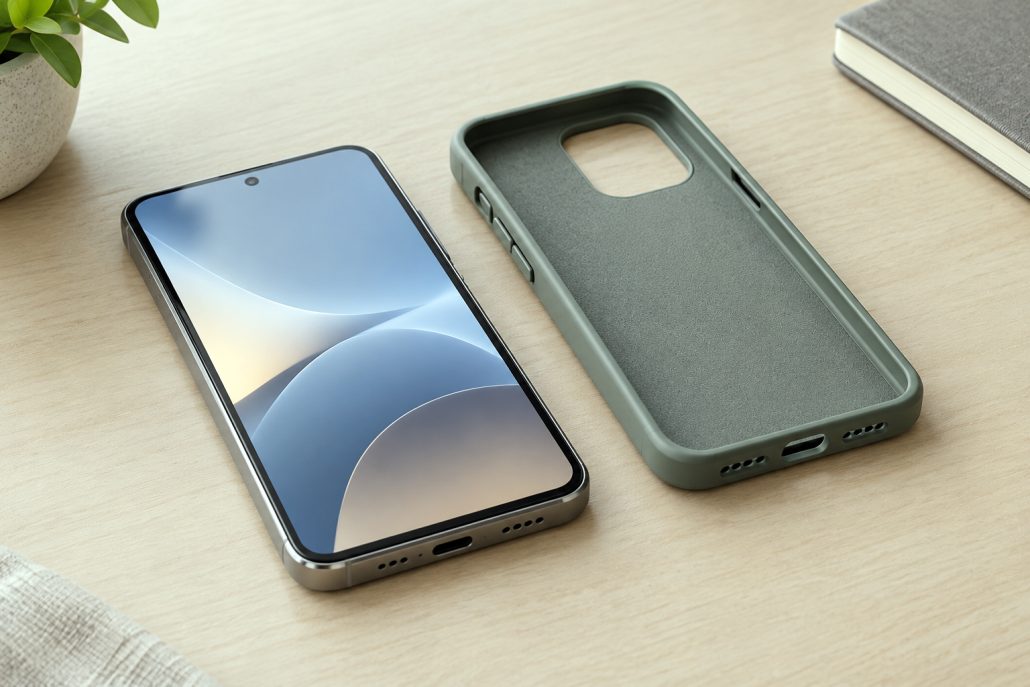
A smartphone and protective case arranged side by side to highlight precise camera cutouts, button openings, and charging port alignment.
Check your device name and model number in the phone settings or on the original packaging. When purchasing a case online, verify that the product listing explicitly supports your exact model and variant.
Pay attention to camera cutouts, speaker openings, side buttons, and charging ports. If your smartphone supports wireless charging or magnetic accessories, check whether the case accommodates those features.
A properly fitting case should sit securely around the device without excessive movement or gaps. Accurate compatibility is the foundation of effective phone protection.
Choose the Right Level of Protection
Protection should be one of your main considerations when selecting a phone case. Different designs offer different levels of resistance against everyday accidents, so consider how you use and carry your smartphone.
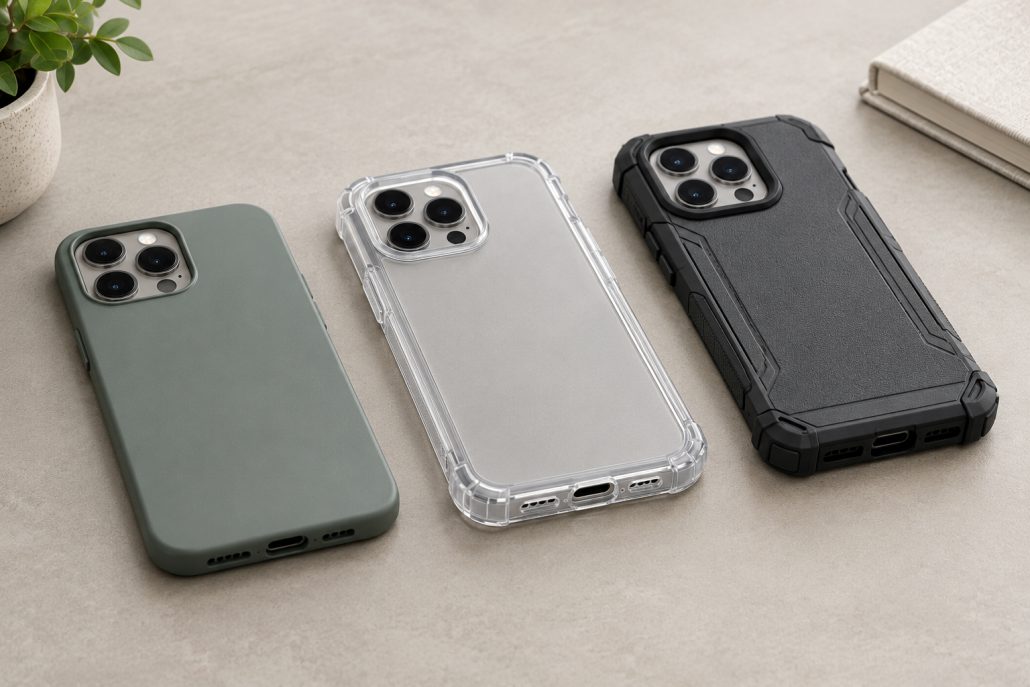
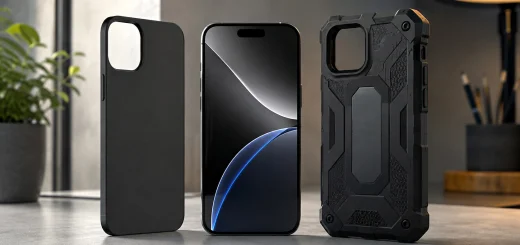
Three smartphone cases with different thicknesses and reinforced edges illustrate everyday, impact-resistant, and rugged protection styles.
Slim cases for everyday protection
Slim cases are ideal for people who want to protect their phones without adding significant bulk. They generally provide protection against scratches, minor bumps, and light everyday impacts.
These cases are suitable for users who handle their devices carefully and prefer a lightweight design. However, very thin cases may offer limited protection against serious drops.
Rugged cases for demanding environments
Rugged cases are designed for users who need additional protection. They often feature reinforced corners, shock-absorbing materials, raised edges, and thicker construction.
They can be useful for outdoor activities, physically demanding jobs, frequent travel, or situations where accidental drops are more likely. Some models also include covered ports or additional grip features.
Heavy-duty cases for maximum protection
Heavy-duty cases typically combine multiple protective layers to absorb impact and help protect vulnerable areas. They are worth considering for people who regularly work in challenging environments or have a history of dropping their phones.
Remember that no case can guarantee complete protection against every fall. The height of a drop, the landing surface, and the angle of impact all influence the outcome.
Understand Different Phone Case Materials
The material used in a phone case affects its durability, flexibility, grip, appearance, and overall feel. Understanding these differences makes it easier to choose a case that matches your needs.
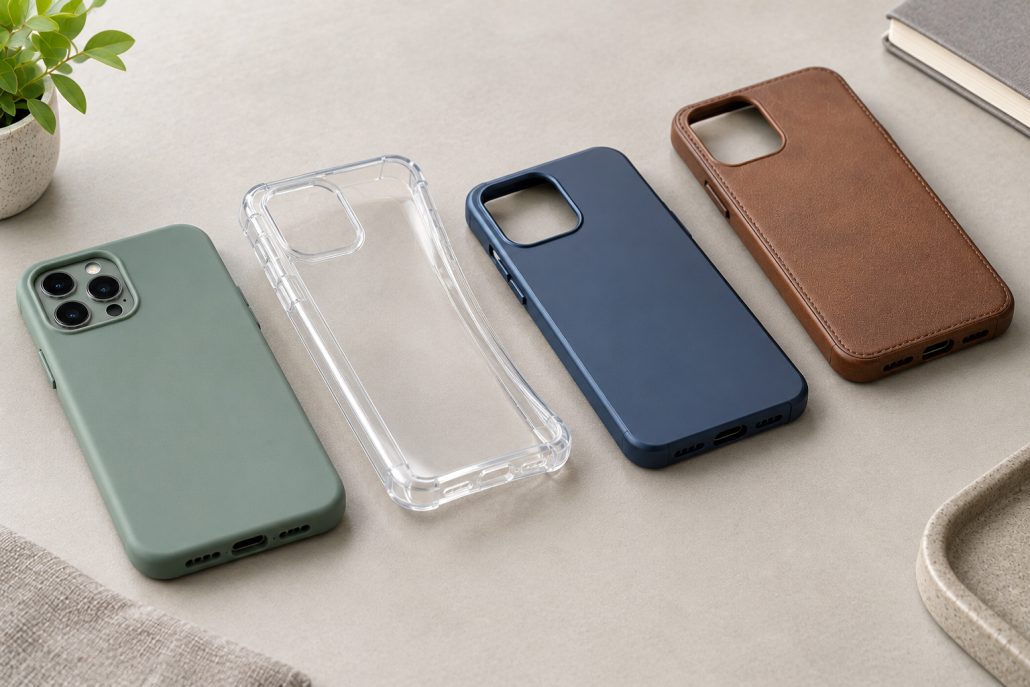
Silicone, transparent TPU, rigid plastic, and leather-style smartphone cases display different textures, finishes, and construction materials.
Silicone cases
Silicone cases are flexible, lightweight, and comfortable to hold. Their soft surfaces often provide a good grip, reducing the likelihood of accidental slips.
They are suitable for everyday use and are available in many colors. However, some silicone cases attract dust or lint, and lower-quality options may become discolored or lose their finish over time.
TPU cases
Thermoplastic polyurethane, commonly known as TPU, is widely used in smartphone cases because it combines flexibility with durability. It can help absorb everyday impacts while maintaining a relatively slim profile.
TPU cases are available in transparent, colored, and textured designs. They are a practical option for users seeking a balance between protection, flexibility, and affordability.
Hard plastic cases
Hard plastic cases, often made from polycarbonate, provide a firm outer shell that resists scratches and everyday wear. They are available in slim designs, making them popular among users who prefer a clean appearance.
However, a rigid case may not absorb impacts as effectively as a well-designed case that combines hard and flexible materials. Look for reinforced edges and suitable drop-protection features.
Leather and fabric cases
Leather cases offer a premium appearance and a comfortable feel, while fabric cases provide distinctive textures and finishes. Both can be attractive choices for professionals and users who value aesthetics.
Their protective performance depends on the internal construction and cushioning. Leather and fabric surfaces may also require additional care to prevent stains, scratches, or discoloration.
Consider the Size, Weight, and Grip
A phone case should protect your smartphone without making it uncomfortable to use. Bulky cases can make larger phones difficult to hold, while slippery finishes may increase the risk of accidental drops.
If you frequently use your phone with one hand, consider a lightweight case with textured sides or a non-slip finish. A secure grip can be particularly helpful when taking photographs, sending messages, or walking outdoors.
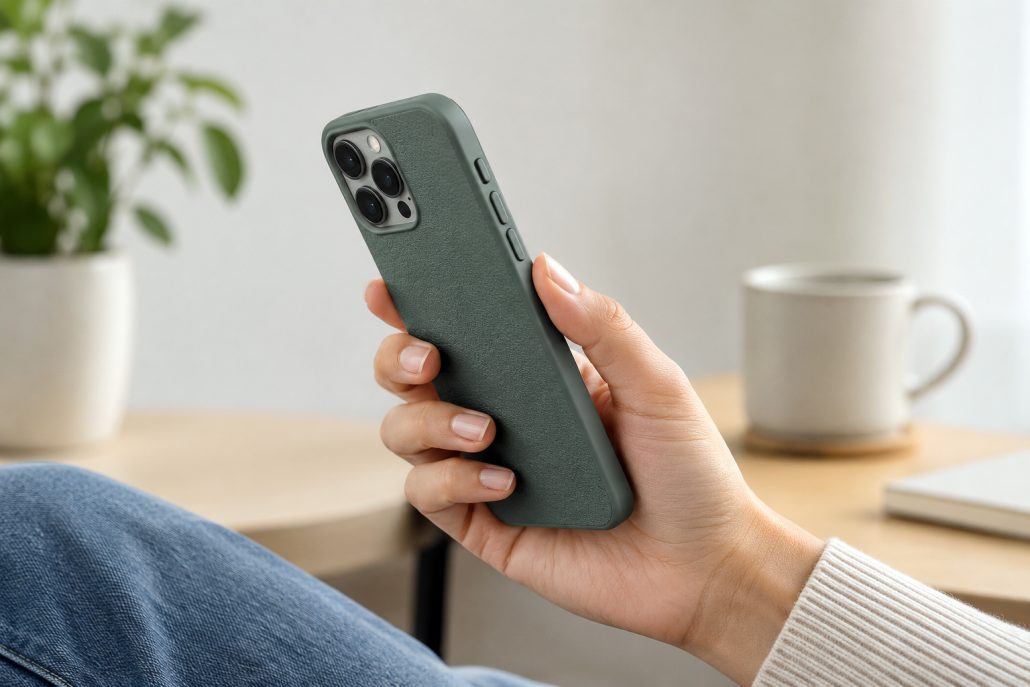
A person holds a smartphone with a slim textured case that provides a comfortable grip and easy access to the side buttons.
Check the case’s thickness and weight before buying it. A slim case may be sufficient for everyday use, while a thicker option might be more appropriate for demanding conditions.
Also consider how the phone fits into your pocket, handbag, or backpack. The right case should provide the protection you need while keeping your smartphone convenient to carry.
Look for Raised Edges and Camera Protection
Modern smartphones often feature prominent camera modules and large displays. These components can be vulnerable when the phone is placed on hard or uneven surfaces.
A good phone case should have slightly raised edges around the screen and camera area. These raised lips help prevent direct contact with surfaces when the phone is placed face down or on its back.
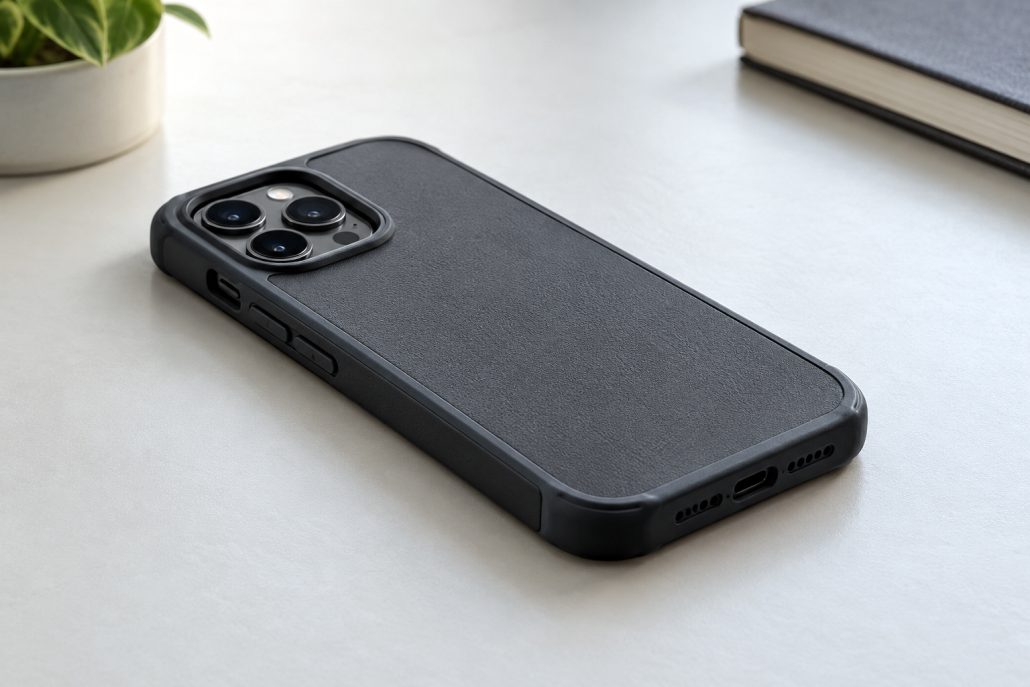
A smartphone in a protective case shows raised screen edges and an elevated camera frame designed to reduce direct contact with surfaces.
Camera protection is especially important for devices with large lenses that extend beyond the rear panel. Some cases include a raised camera frame, while others feature individual lens surrounds.
Check that the protective edges do not interfere with screen protectors, camera accessories, or image quality. A well-designed case should protect vulnerable areas without obstructing everyday use.
Decide Whether You Need Extra Features
Many modern phone cases offer features beyond basic protection. These additions can make your smartphone more convenient, depending on your daily routine.
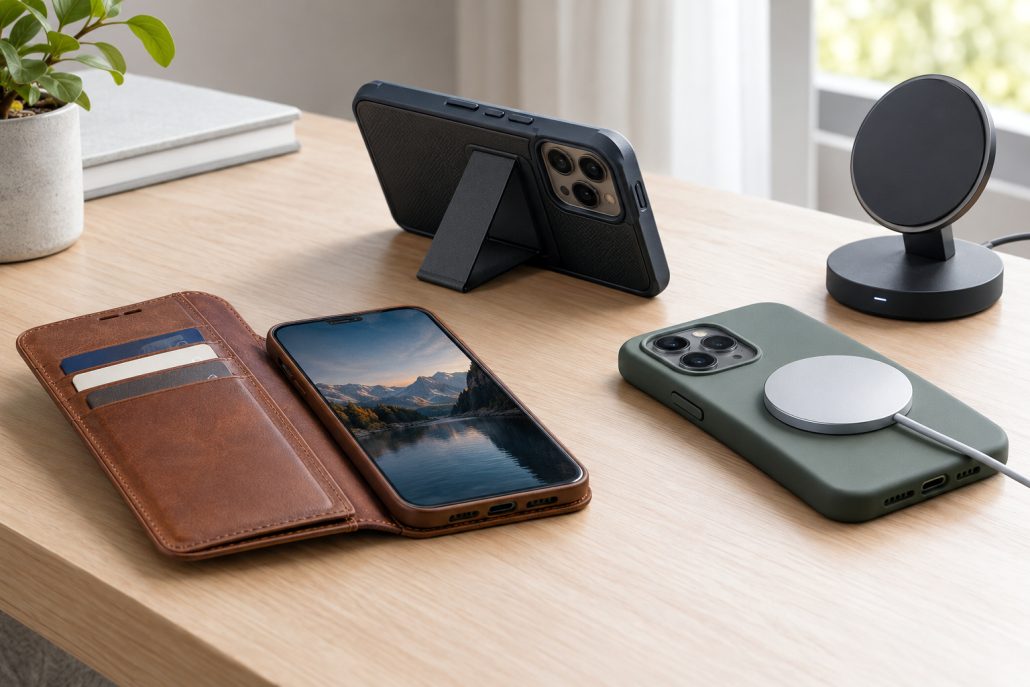
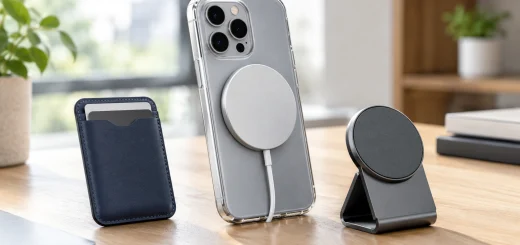
Smartphone cases with card storage, a built-in kickstand, and magnetic accessory compatibility demonstrate useful features beyond basic protection.
Wallet cases include slots for cards and sometimes cash, reducing the need to carry a separate wallet. They are useful for people who prefer an all-in-one accessory.
Kickstand cases allow the phone to stand at a convenient viewing angle. They are practical for watching videos, attending video calls, or following recipes.
Magnetic cases support compatible magnetic mounts, wallets, and other accessories. If wireless charging is important to you, check the case’s compatibility with your specific charging system.
Water-resistant cases can provide additional protection against moisture when designed and tested for that purpose. However, ordinary phone cases should not be assumed to provide waterproof protection.
Lanyard-compatible cases allow you to attach a strap, making the phone easier to carry and helping reduce the risk of dropping it.
Choose features that solve genuine problems rather than paying extra for additions you rarely use.
Balance Style With Practicality
A phone case is also a personal accessory, and its appearance can be just as important as its protective qualities. Options range from transparent cases that showcase the original phone design to colorful, patterned, minimalist, and premium finishes.
Transparent cases are suitable for users who want to preserve the look of their smartphones. However, some clear materials can develop a yellowish appearance over time, depending on their composition and exposure to sunlight.
Matte finishes can help reduce visible fingerprints, while textured designs may improve grip. Darker colors can conceal certain marks, whereas lighter finishes may show dirt more easily.
Printed and decorative cases allow you to personalize your device, but make sure the design does not come at the expense of quality. Check the material, fit, edge protection, and button responsiveness before choosing a case based on appearance alone.
Check Quality, Price, and Durability
The most expensive phone case is not necessarily the best option. Instead of focusing exclusively on price, compare the construction, protective features, material quality, and expected lifespan.
Read customer reviews to identify recurring complaints about poor fit, loose buttons, slippery surfaces, or premature discoloration. Product photographs can be useful, but real-world feedback often reveals details that are difficult to judge from images alone.
Look for clearly described protection features and reliable manufacturing quality. If drop-test claims are important to you, check whether the manufacturer explains the testing conditions rather than relying on vague marketing statements.
It is also worth considering how easily the case can be cleaned and whether its material is likely to wear out with regular use. A durable case that remains comfortable and secure over time can offer better value than a cheaper option that needs frequent replacement.
Match Your Phone Case to Your Lifestyle
Your daily routine should influence your final decision. Office workers and casual users may prefer slim cases with a professional appearance. Travelers and outdoor enthusiasts may benefit from rugged designs with improved grip and reinforced corners.
Students might prefer affordable, colorful cases that provide reliable everyday protection. People who frequently watch videos may appreciate a built-in kickstand, while users who rely on wireless charging should prioritize compatible designs.
If you use your phone for photography, choose a case that protects the camera without obstructing its lenses. If you often carry your device while exercising or commuting, consider a secure grip or lanyard attachment.
Think about your most common risks rather than buying the thickest or most feature-packed case available. The ideal case provides protection suited to your circumstances without creating unnecessary inconvenience.
Final Thoughts
Choosing the right phone case involves more than selecting an attractive design. You need to consider device compatibility, protection level, materials, grip, camera protection, useful features, and long-term durability.
Start by confirming your exact smartphone model, then decide how much protection your lifestyle requires. Compare suitable materials, check the quality of raised edges and reinforced corners, and ensure that the case supports your preferred charging method and accessories.
Most importantly, choose a case that you will feel comfortable using every day. A well-fitting, durable phone case can help keep your smartphone in better condition, reduce everyday wear, and provide greater peace of mind.
By balancing protection, practicality, and personal style, you can find a phone case that suits both your device and your daily needs.