Best Phone Cases for Everyday Protection
Choosing the right phone case is one of the simplest ways to protect an expensive smartphone from scratches, bumps, accidental drops, and everyday wear. Phone cases are no longer limited to basic plastic covers. Modern designs combine shock absorption, improved grip, raised edges, magnetic accessory support, camera protection, and slimmer profiles.
However, the best phone case for one person may not be the right choice for another. Someone who works outdoors may need a rugged case, while an office user may prefer something slim and lightweight (Rugged vs Slim Phone Cases: Which One Should You Buy?). Clear cases are ideal for showing off a phone’s design, while wallet cases can reduce the need to carry a separate card holder.
The key is to choose a case based on how you actually use your smartphone.
Table of Contents
Why You Need a Protective Phone Case
Modern smartphones feature premium glass backs, large camera modules, thin frames, and increasingly expensive displays. While manufacturers continue to improve durability, accidental drops can still result in cracked glass, damaged camera lenses, or scratched frames.
A good case provides an additional layer between the smartphone and the environment. It can also improve grip, reducing the chance of dropping the device in the first place.
Current case designs increasingly focus on balancing protection with comfort. Slim protective cases, for example, can provide reinforced corners and shock-absorbing materials without the bulk associated with traditional rugged cases.
Best Types of Phone Cases for Everyday Protection
There is no single best design for everyone. The following case types cover the most common smartphone needs.
1 Slim Protective Phone Cases
Slim cases are a great choice for users who want everyday protection without significantly increasing the size of their phone.
The best slim cases typically use materials such as TPU, polycarbonate, or a combination of both. TPU provides flexibility and shock absorption, while polycarbonate adds rigidity and structural support.
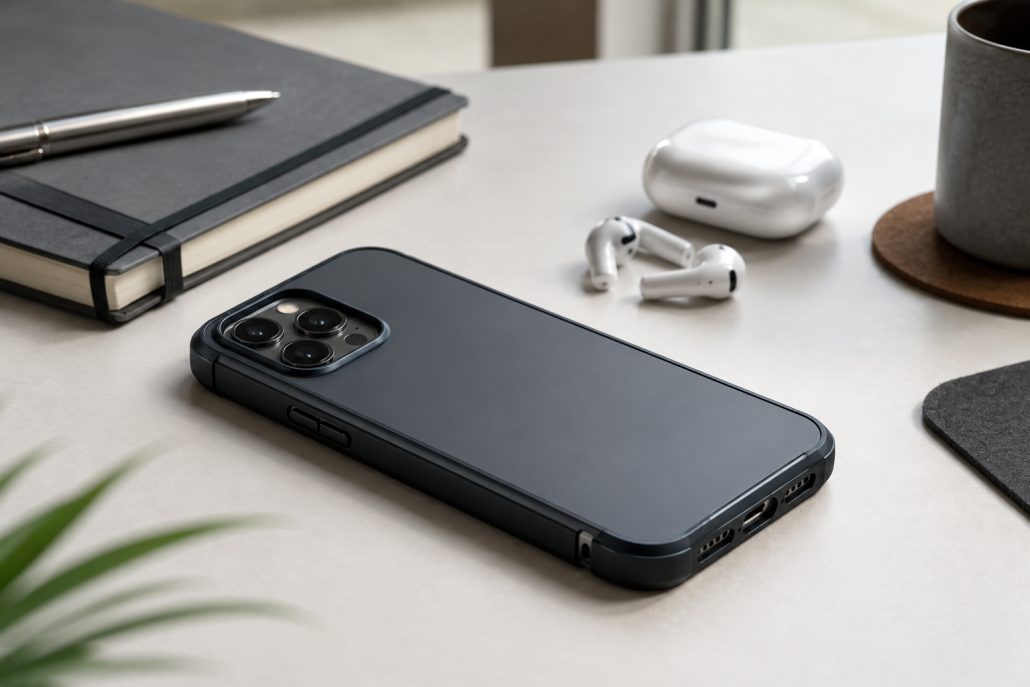
Modern smartphone with a slim protective case on a minimalist desk with notebook and wireless earbuds.
Look for reinforced corners, raised edges around the display, and additional protection around the camera module.
Best for:
- Office and home users
- People who want pocket-friendly protection
- Users who dislike bulky cases
- Everyday scratches, bumps, and short drops
Slim cases are not designed for extreme environments, but they can offer an excellent balance between protection and comfort.
2 Rugged Phone Cases
If you frequently drop your phone or work in demanding environments, a rugged case is worth considering.
Rugged cases generally use multiple layers or reinforced structures to improve impact resistance. Some models also include textured surfaces for better grip, raised camera surrounds, reinforced corners, and screen protection.
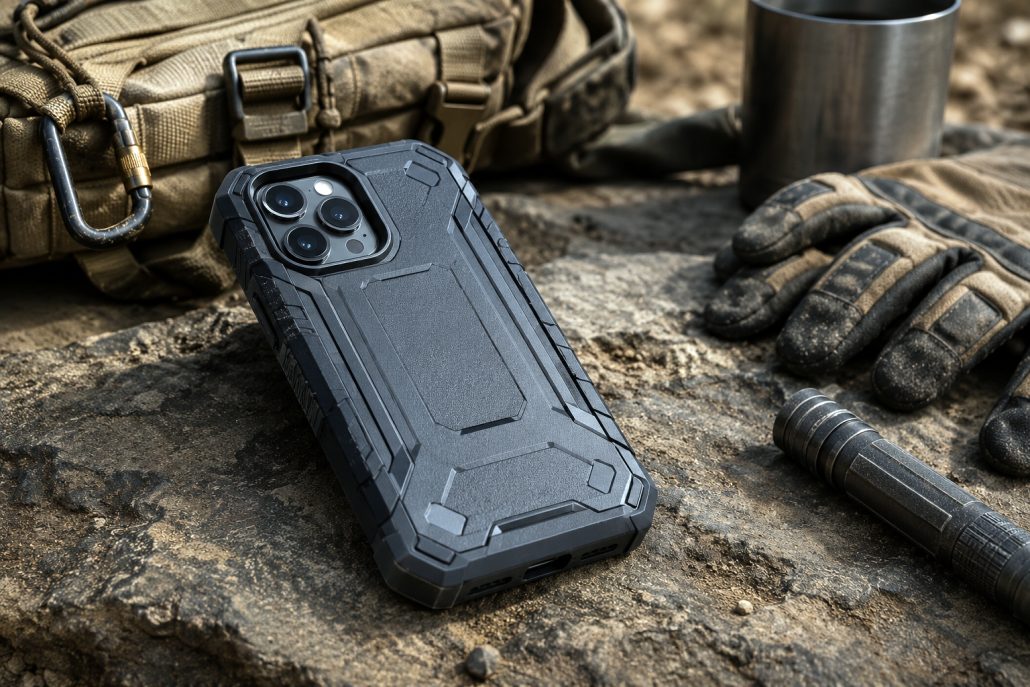
Smartphone in a rugged protective case with reinforced corners and textured grips on an outdoor work surface.
Drop ratings can help when comparing rugged cases, but consumers should also consider how the testing was conducted rather than focusing solely on the largest number advertised. Drop ratings indicate the height and conditions under which a case has been tested for impact protection.
Best for:
- Outdoor workers
- Travelers
- Construction and industrial environments
- Frequent phone droppers
- Parents and active users
The biggest drawback is size. Rugged cases can make a slim smartphone noticeably thicker and heavier.
3 Clear Phone Cases
Clear cases remain popular because they protect the phone while allowing its original color and design to remain visible.
A good clear case should offer more than basic scratch protection. Look for flexible edges, reinforced corners, raised camera protection, and materials designed to resist yellowing.
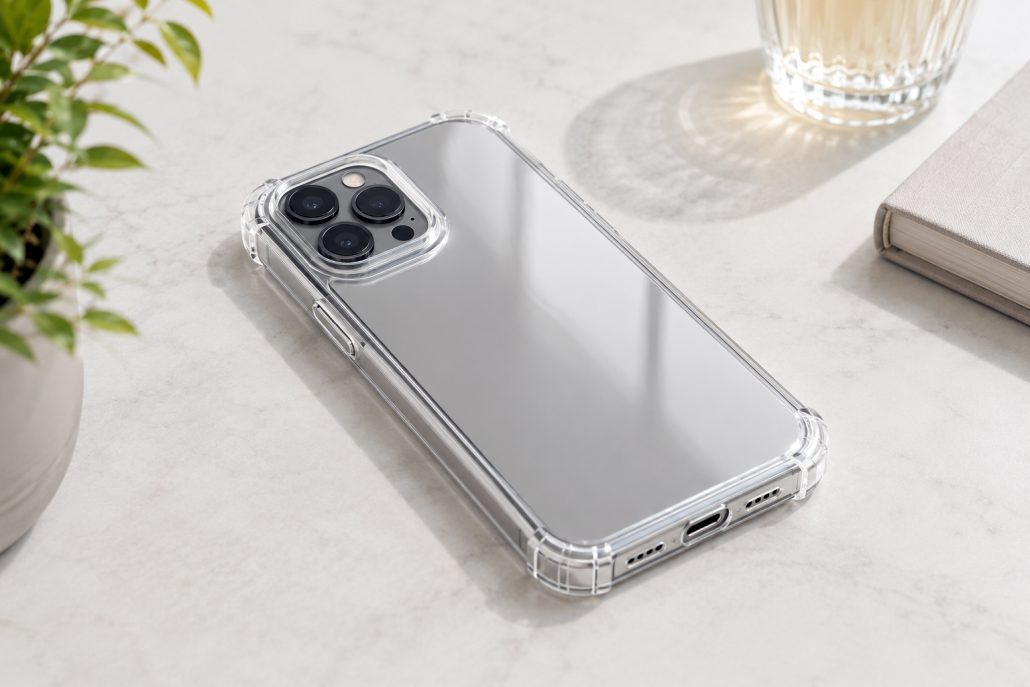
Premium smartphone with a transparent protective case showing its original design and raised camera protection.
Hybrid TPU and polycarbonate designs are particularly useful because they can combine flexible impact protection with a rigid transparent back.
Best for:
- Users who like their phone’s original design
- Minimalist setups
- New smartphones with attractive finishes
- Everyday scratch and drop protection
Keep in mind that inexpensive transparent cases can discolor over time, particularly with frequent exposure to heat and sunlight.
4 MagSafe and Magnetic Phone Cases
Magnetic phone cases have become increasingly useful because they allow smartphones to work with compatible chargers, wallets, stands, mounts, and other accessories.
For iPhone users, MagSafe compatibility is particularly important. Android manufacturers are also increasingly offering magnetic accessory ecosystems or cases that add magnetic rings.
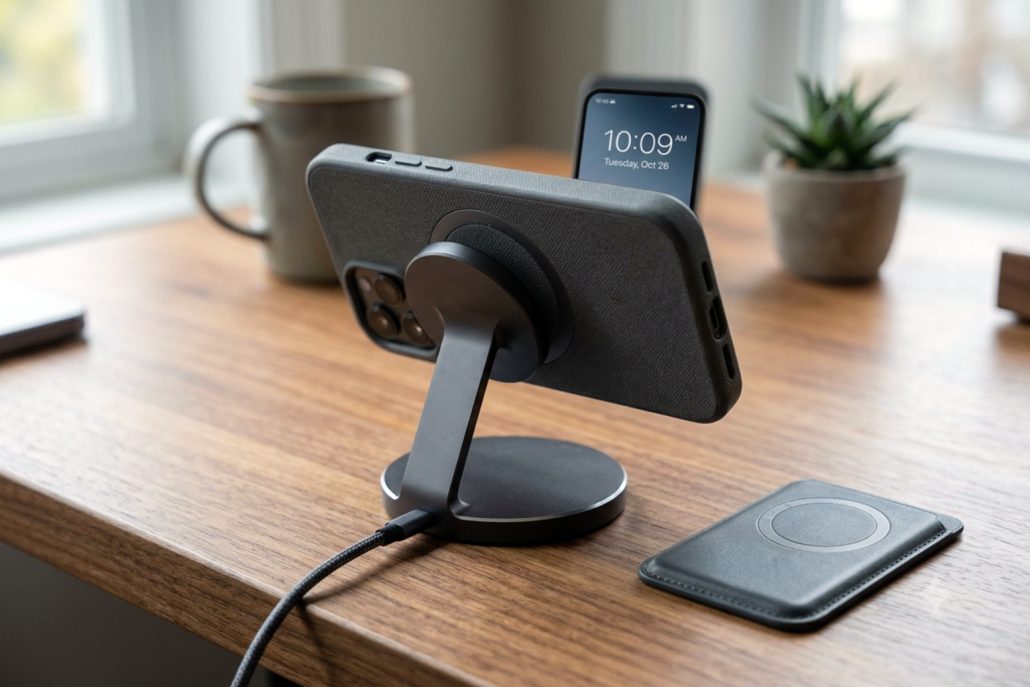
A smartphone in a dark gray protective case magnetically attached to a minimalist wireless charging stand on a wooden desk next to a magnetic leather wallet.
When buying a magnetic case, check whether the magnets are properly aligned and strong enough for the accessories you intend to use. A case that supports wireless charging but has weak magnetic attachment may be frustrating for everyday use.
Best for:
- Wireless charging users
- Magnetic car mounts
- Magnetic wallets
- Desk stand users
- People who frequently switch accessories
5 Wallet and Folio Cases
Wallet cases combine smartphone protection with storage for cards or cash. They can be especially convenient for people who want to carry fewer items.
Folio designs typically cover the front and back of the phone, providing additional protection when the device is inside a bag or pocket.
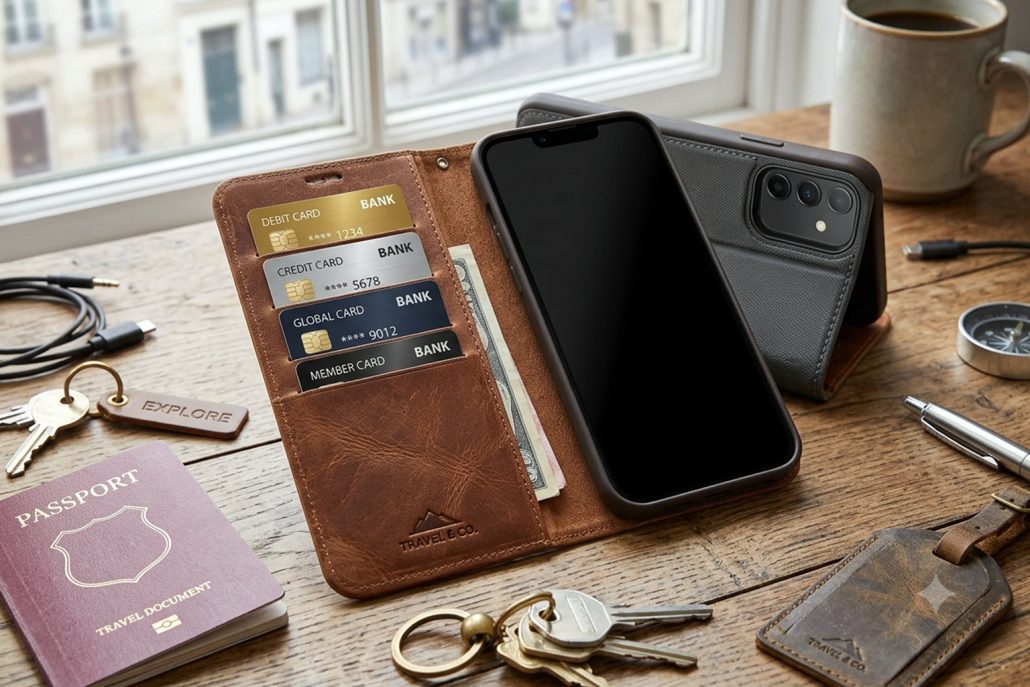
Open brown leather folio wallet phone case displaying card slots with payment cards inside, resting on a wooden desk alongside a passport booklet, keys, and travel accessories.
The trade-off is additional thickness. Wallet cases can also be less convenient when taking quick photos or using wireless charging, depending on the design.
Best for:
- Minimalists
- Travelers
- People who carry several cards
- Users who want front-and-back coverage
6 Silicone and Soft-Touch Cases
Silicone-style cases are popular because they feel comfortable and provide good grip.
Their slightly soft texture can make a phone easier to hold, which is an important part of everyday protection. Preventing a drop before it happens can be just as valuable as absorbing the impact afterward.
However, soft cases can attract dust and may show wear more quickly than harder materials.
Best for:
- Comfortable everyday use
- Users who prioritize grip
- Minimalist phone setups
- People who prefer a soft-touch finish
Features to Look for in the Best Phone Cases
When shopping for the best phone cases for everyday protection, pay attention to more than appearance.
Shock-Absorbing Materials
TPU is a popular choice because it provides flexibility, impact absorption, and relatively low bulk. Hybrid cases combining TPU with polycarbonate can provide additional structural support.
Reinforced Corners
Corners are particularly important because they can absorb significant impact during a drop. Even slim cases should ideally provide some reinforcement around these areas.
Raised Screen Edges
A slightly raised lip around the display can help prevent the screen from making direct contact with flat surfaces when the phone is placed face-down.
Camera Protection
Modern smartphone cameras often protrude from the rear panel. A protective case should extend around the camera area without interfering with lenses or flash components.
Strong Grip
A slippery case can increase the likelihood of accidental drops. Textured sides or a slightly rubberized finish can make the phone easier to hold.
Wireless Charging Compatibility
If you use wireless charging, make sure the case supports it. Magnetic cases should also provide reliable alignment with compatible charging accessories.
Precise Fit
Always purchase a case specifically designed for your exact smartphone model. Even phones from the same product family can have differences in camera dimensions, button placement, thickness, and port positioning.
How to Choose the Right Phone Case for Your Lifestyle
The easiest way to choose a case is to start with your daily routine.
If you rarely drop your phone and want something comfortable, a slim protective case is likely enough. If your smartphone frequently goes outdoors or into demanding environments, choose a rugged model.
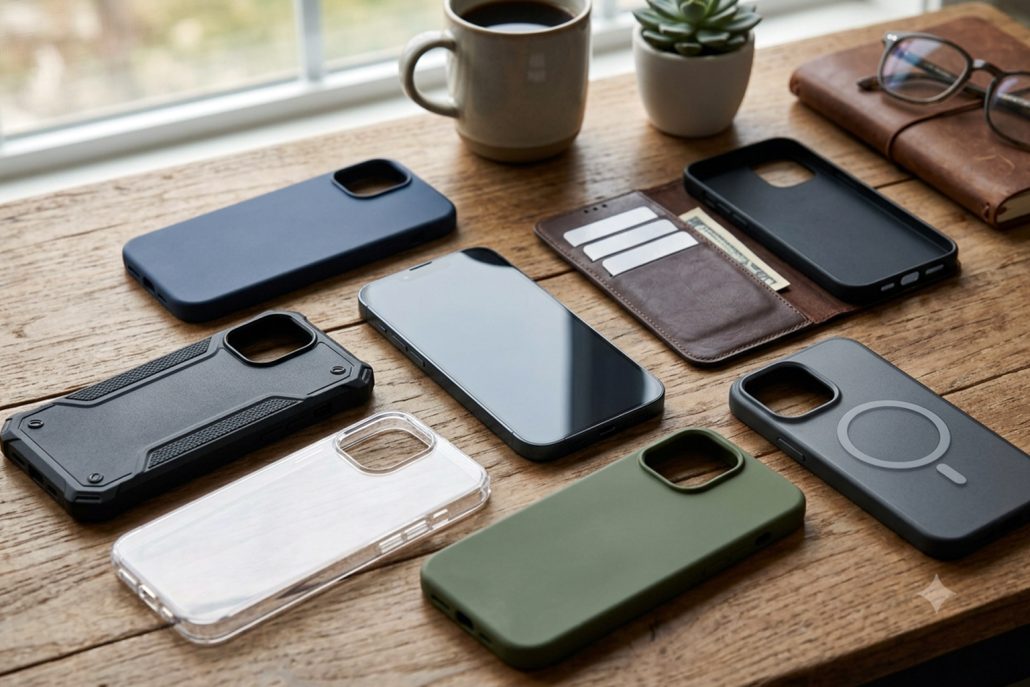
A modern desk arrangement displaying a range of smartphone protective choices, featuring clear, rugged, magnetic, wallet, and silicone style cases around a single mobile device.
For users who want to maintain the original appearance of their device, a clear case is a practical option. If you rely heavily on wireless charging and magnetic accessories, choose a compatible magnetic case.
You should also consider how much bulk you are willing to accept. The most protective case is not necessarily the best everyday case if it makes your phone uncomfortable to carry.
Recent case comparisons similarly emphasize that the right choice depends on the user’s routine, with slim cases favoring comfort and rugged cases prioritizing impact resistance.
Are Expensive Phone Cases Worth It?
Not necessarily.
A premium case may offer better materials, stronger construction, better magnetic integration, or more extensive testing. However, price alone does not guarantee better protection.
A reasonably priced case with reinforced corners, a raised display lip, good grip, and reliable construction can provide excellent everyday protection.
Instead of choosing a case based solely on brand or price, compare its materials, design, protection features, compatibility, and warranty.
Final Thoughts
The best phone cases for everyday protection are those that match your lifestyle rather than simply offering the highest possible level of protection.
Slim cases are ideal for everyday comfort, rugged cases are better for demanding environments, clear cases preserve your phone’s appearance, and magnetic cases add convenience for modern accessories. Wallet and silicone cases also remain useful for users with specific preferences.
Before buying, check the exact phone model, case material, corner protection, raised edges, camera coverage, grip, wireless charging compatibility, and overall size.
The best phone case is ultimately the one that gives you enough protection for your everyday risks without making your smartphone uncomfortable to use.