Operating Systems for IoT Devices: Challenges and Solutions
Operating Systems for IoT Devices are the backbone of today’s connected world, enabling billions of smart devices to communicate, process data, and perform automated tasks efficiently. From smart home appliances and wearable fitness trackers to industrial sensors, healthcare equipment, and connected vehicles, these specialized operating systems manage hardware resources, facilitate secure communication, and ensure reliable performance.
Table of Contents
- What Is an IoT Operating System?
- Why IoT Operating Systems Are Different
- Challenge 1: Limited Hardware Resources
- Challenge 2: Power Consumption
- Challenge 3: Security Risks
- Challenge 4: Real-Time Performance
- Challenge 5: Connectivity and Compatibility
- Challenge 6: Scalability
- Emerging Solutions for IoT Operating Systems
- Best Practices for Choosing an IoT Operating System
- The Future of IoT Operating Systems
- Conclusion
Unlike desktop or mobile operating systems, IoT operating systems are specifically designed for devices with limited processing power, memory, and battery life. They must also provide reliable performance while maintaining strong security against increasingly sophisticated cyber threats. As IoT adoption continues to grow across industries in 2026, choosing the right operating system has become more important than ever.

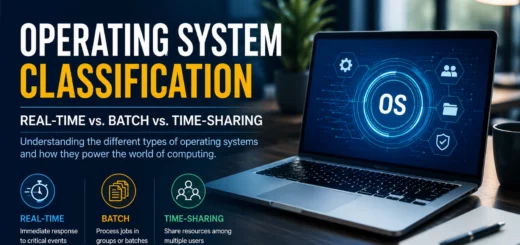
Comparison of a Real-Time Operating System (RTOS) and a traditional operating system, highlighting differences in response time, resource efficiency, deterministic performance, and common use cases for IoT and computing devices.
What Is an IoT Operating System?
An IoT operating system is lightweight software that manages the hardware and software resources of connected devices. It controls memory usage, processor scheduling, communication protocols, file systems, and application execution while consuming as little power as possible.

Layered IoT architecture diagram illustrating hardware sensors and microcontrollers, IoT operating system layer, connected applications, and cloud platform communication in a modern connected ecosystem.
Unlike traditional operating systems such as Windows or macOS, IoT operating systems are optimized for embedded devices with strict resource limitations. Many IoT devices have only a few megabytes-or even kilobytes-of memory, making efficiency a top priority. Popular IoT operating systems include FreeRTOS, Zephyr OS, Embedded Linux, RIOT OS, and Contiki-NG. Each is designed for different hardware capabilities and application requirements, ranging from simple sensors to advanced industrial controllers.
Why IoT Operating Systems Are Different
IoT devices are expected to operate continuously for months or even years without interruption. Many run on batteries, while others function in remote or harsh environments where maintenance is difficult. Because of these constraints, IoT operating systems focus on stability, energy efficiency, and real-time responsiveness rather than offering complex graphical interfaces or multitasking features found on personal computers. These specialized operating systems also support various wireless communication technologies such as Wi-Fi, Bluetooth Low Energy (BLE), Zigbee, LoRaWAN, and cellular networks. Their ability to manage these protocols efficiently is essential for maintaining reliable connectivity.
Challenge 1: Limited Hardware Resources
One of the biggest challenges for IoT operating systems is working with extremely limited hardware. Many IoT devices use low-power microcontrollers that have minimal RAM, limited storage, and modest processing capabilities. Running unnecessary background services or inefficient software can quickly exhaust available resources.

Compact IoT sensor board illustrating efficient resource optimization with CPU, RAM, battery, and storage icons connected by optimization arrows for improved IoT operating system performance.
To overcome this limitation, modern IoT operating systems use lightweight kernels and modular architectures. Developers can include only the components required for a specific application, reducing memory consumption and improving overall performance. Efficient task scheduling and optimized memory allocation also help devices operate smoothly despite limited hardware.
Challenge 2: Power Consumption
Battery life is a critical concern for IoT devices. Smart sensors installed in remote locations or wearable devices may need to operate for years without battery replacement. Even small increases in energy consumption can significantly reduce device lifespan. IoT operating systems address this challenge by incorporating advanced power management features. Devices can enter sleep mode when idle and wake only when necessary. Intelligent scheduling ensures that the processor remains active only for essential tasks, while low-power communication protocols reduce energy usage during wireless data transmission. These optimizations enable IoT devices to deliver reliable performance while maximizing battery life.
Challenge 3: Security Risks
Security remains one of the most significant concerns in the IoT ecosystem. Since connected devices often handle sensitive information and communicate over the internet, they are attractive targets for cybercriminals. Weak authentication, outdated firmware, and insecure communication channels can expose devices to malware, ransomware, data theft, and unauthorized access.

Connected IoT network protected by a digital security shield featuring encryption, secure boot, over-the-air updates, authentication, and connected smart devices for enhanced IoT operating system security.
Modern IoT operating systems include multiple layers of protection to reduce these risks. Features such as secure boot, encrypted communication, hardware-based authentication, and secure firmware updates help ensure that only trusted software runs on the device. Over-the-air (OTA) update support has also become an essential capability. It allows manufacturers to release security patches remotely without requiring physical access to deployed devices, helping protect millions of devices against newly discovered vulnerabilities.
Challenge 4: Real-Time Performance
Many IoT applications require immediate responses. Industrial robots, medical monitoring systems, automotive safety features, and smart traffic controls all depend on precise timing. Delays of even a few milliseconds can affect performance or create safety risks. Real-Time Operating Systems (RTOS) are designed specifically to meet these demanding requirements. Unlike conventional operating systems, an RTOS guarantees predictable task execution and low-latency processing. By prioritizing critical tasks and minimizing scheduling delays, RTOS platforms enable IoT devices to perform reliably in time-sensitive applications.
Challenge 5: Connectivity and Compatibility
IoT devices communicate using numerous networking standards, making compatibility another major challenge. A smart home may include devices using Wi-Fi, Bluetooth, Zigbee, and Thread simultaneously, while industrial environments often rely on Ethernet and cellular communication.

Industrial robots, smart factory equipment, and autonomous vehicles connected through Wi-Fi, Bluetooth, Zigbee, LoRaWAN, and 5G, demonstrating real-time data communication in an Industrial IoT network.
Modern IoT operating systems solve this issue through modular networking stacks that support multiple communication protocols. This flexibility allows manufacturers to develop products that integrate seamlessly into different ecosystems without requiring significant software changes. Improved compatibility also makes IoT deployments easier to scale as organizations add new devices over time.
Challenge 6: Scalability
As IoT networks continue expanding, managing thousands or even millions of connected devices becomes increasingly complex. Organizations must monitor device health, deploy software updates, maintain security, and collect operational data across large distributed environments. Today’s IoT operating systems simplify large-scale deployments by supporting cloud connectivity and centralized device management. Administrators can remotely configure devices, monitor performance, and distribute firmware updates through cloud platforms, reducing maintenance costs while improving operational efficiency. Edge computing support has further enhanced scalability by allowing devices to process data locally instead of sending everything to the cloud. This reduces bandwidth usage, improves response times, and minimizes latency.
Emerging Solutions for IoT Operating Systems
The rapid evolution of IoT technology has encouraged operating system developers to introduce innovative features that improve performance and reliability. Artificial intelligence is becoming an important addition to IoT operating systems. AI-powered resource management can optimize processor usage, predict hardware failures, and improve battery efficiency by adapting system behavior based on real-time conditions. Tiny Machine Learning (TinyML) is another significant advancement. It enables lightweight AI models to run directly on microcontrollers, allowing devices to perform intelligent tasks such as anomaly detection, voice recognition, and predictive maintenance without relying on cloud computing. Containerization is also gaining popularity in industrial IoT and edge computing environments. Lightweight containers simplify software deployment while improving application isolation and update management. This approach allows developers to deploy new features more efficiently without affecting other system components. Meanwhile, open-source operating systems continue to drive innovation. Platforms like FreeRTOS and Zephyr receive continuous improvements from global developer communities, offering greater flexibility, lower development costs, and faster adoption of new technologies.
Best Practices for Choosing an IoT Operating System
Selecting the right operating system depends on the specific requirements of an IoT project. Developers should evaluate hardware compatibility, memory requirements, power consumption, networking capabilities, security features, and real-time performance before making a decision. Long-term support is equally important. Choosing an operating system with active community development and regular security updates helps ensure devices remain protected throughout their lifecycle. Scalability should also be considered early in the design process. An operating system capable of supporting cloud integration, remote device management, and future software enhancements will provide greater value as IoT deployments grow.
The Future of IoT Operating Systems
The future of IoT operating systems will be driven by automation, artificial intelligence, and stronger cybersecurity. AI-native operating systems will dynamically optimize resource allocation, reduce power consumption, and detect threats in real time without human intervention.

AI-powered edge computing ecosystem connecting smart cities, autonomous drones, industrial IoT devices, digital twins, and cloud infrastructure through intelligent real-time networks.
Zero-trust security models are expected to become standard, requiring continuous authentication between devices and networks. At the same time, quantum-resistant encryption technologies will begin protecting IoT infrastructure from future cyber threats. Edge AI, digital twins, and autonomous device management will further expand the capabilities of IoT operating systems, making connected devices more intelligent, efficient, and reliable than ever before.
Conclusion
Operating systems form the foundation of every IoT device, enabling efficient hardware management, secure communication, and reliable application performance. However, designing an operating system for resource-constrained devices presents unique challenges, including limited hardware, battery optimization, cybersecurity, real-time responsiveness, and large-scale device management. Modern IoT operating systems overcome these obstacles through lightweight architectures, advanced security mechanisms, intelligent power management, and scalable cloud integration. Emerging technologies such as AI, TinyML, edge computing, and containerization are further enhancing their capabilities, preparing IoT devices for increasingly complex applications. As connected technology continues to expand across industries, selecting the right IoT operating system will remain a critical factor in building secure, efficient, and future-ready smart devices.