Embedded Operating Systems: Applications and Examples
Embedded operating systems (Embedded OS) are specialized operating systems designed to perform dedicated functions within embedded systems. Unlike desktop or mobile operating systems, embedded operating systems are optimized for specific hardware, limited resources, and real-time performance requirements. These systems power countless devices that people use daily, from smart appliances and medical equipment to automobiles and industrial machines.
Table of Contents
- What Is an Embedded Operating System?
- Key Characteristics of Embedded Operating Systems
- Components of an Embedded Operating System
- Types of Embedded Operating Systems
- Common Applications of Embedded Operating Systems
- Popular Examples of Embedded Operating Systems
- Advantages of Embedded Operating Systems
- Challenges of Embedded Operating Systems
- Future of Embedded Operating Systems
- Conclusion
As the Internet of Things (IoT), automation, and smart technologies continue to expand, embedded operating systems have become increasingly important. They enable devices to operate efficiently, reliably, and securely while consuming minimal processing power and memory.
What Is an Embedded Operating System?
An embedded operating system is a software platform designed specifically for embedded devices. These devices are built to perform a dedicated task or a limited set of functions rather than serving as general-purpose computers.

Microcontroller board connected to sensors, display modules, wireless communication components, and electronic devices in an embedded operating system architecture.
Embedded operating systems manage hardware resources, control device operations, schedule tasks, and facilitate communication between software and hardware components. They are often designed to run on microcontrollers, microprocessors, or system-on-chip (SoC) architectures. Unlike traditional operating systems such as Windows, macOS, or Linux desktop distributions, embedded operating systems prioritize efficiency, reliability, and low resource consumption.
Key Characteristics of Embedded Operating Systems
1. Real-Time Performance
Many embedded systems require real-time responses to external events. Real-time embedded operating systems (RTOS) ensure that critical tasks are completed within strict timing constraints.
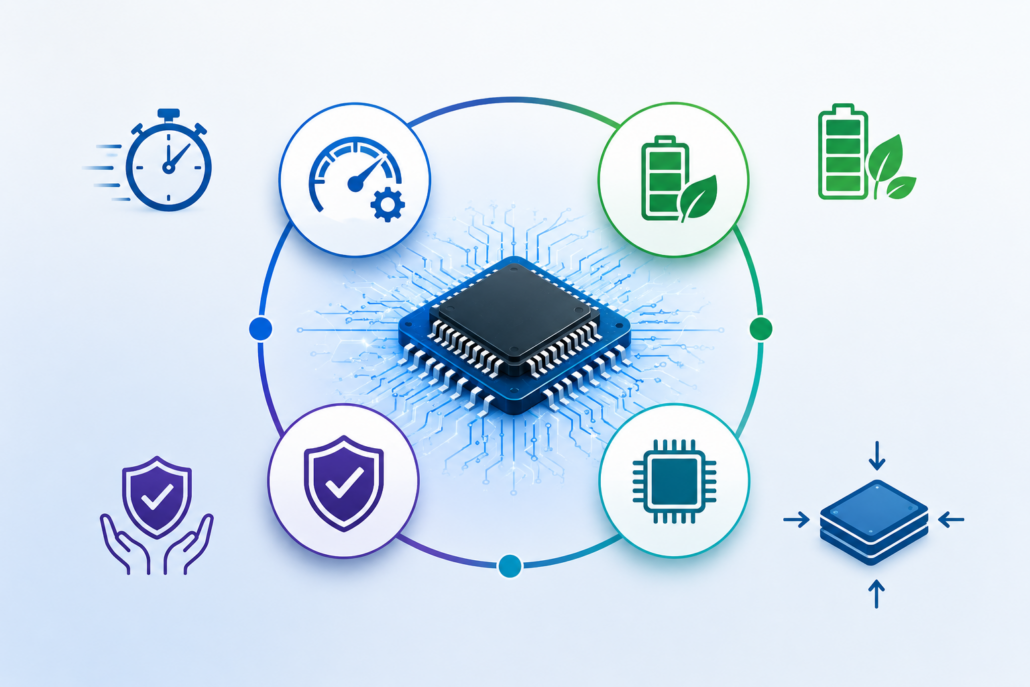
Infographic illustrating the key characteristics of embedded operating systems, including real-time processing, low power consumption, reliability, and compact design around a central microchip.
Examples include:
- Automotive braking systems
- Medical monitoring equipment
- Industrial automation systems
2. Resource Efficiency
Embedded devices often have limited memory, storage, and processing power. Embedded operating systems are designed to operate efficiently within these constraints.
3. Reliability and Stability
Many embedded applications run continuously for months or even years without interruption. Therefore, reliability is a crucial requirement.
4. Small Footprint
Embedded operating systems are compact and occupy minimal storage space, making them suitable for devices with limited hardware resources.
5. Customizability
Manufacturers can customize embedded operating systems to include only the features required for specific applications, reducing overhead and improving performance.
6. Low Power Consumption
Battery-powered devices such as wearables and IoT sensors require operating systems that minimize energy usage.
Components of an Embedded Operating System
An embedded operating system typically consists of the following components:
Kernel
The kernel manages system resources, scheduling, memory allocation, and communication between software and hardware.
Device Drivers
Device drivers allow the operating system to communicate with hardware components such as sensors, displays, network modules, and storage devices.
File System
Some embedded systems use lightweight file systems to store data and application settings.
Networking Stack
Modern embedded devices often include networking capabilities such as Wi-Fi, Bluetooth, Ethernet, or cellular communication.
Application Layer
This layer contains the software responsible for the device’s primary functions.
Types of Embedded Operating Systems
Real-Time Operating Systems (RTOS)
RTOS platforms are designed for applications where timing is critical.
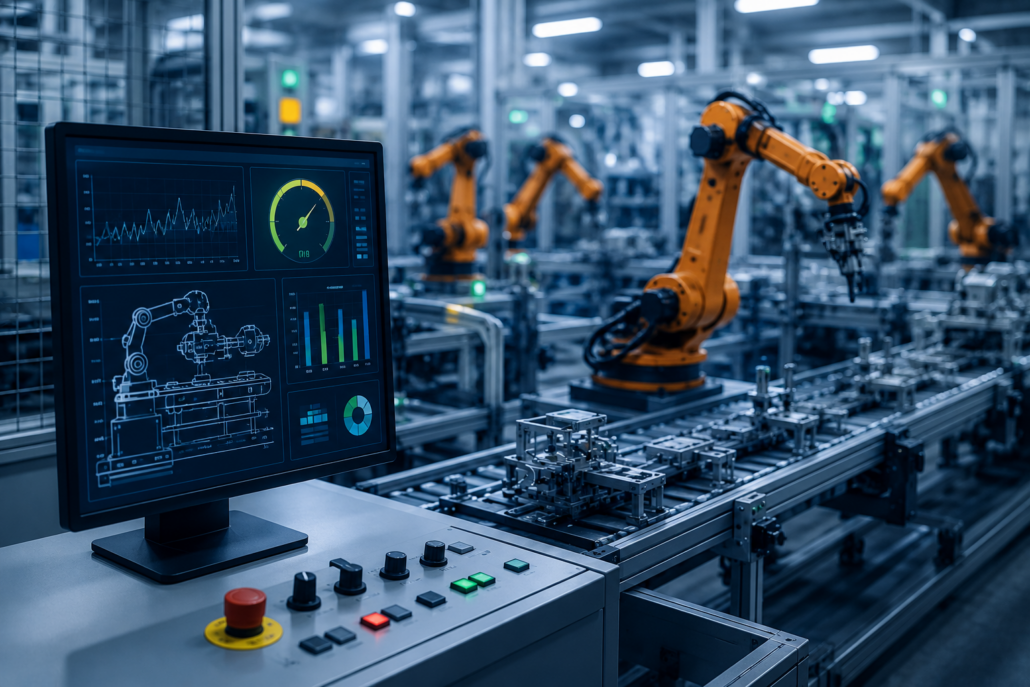
Industrial control system dashboard monitoring robotic production equipment with real-time data processing powered by a real-time operating system (RTOS).
Examples include:
- FreeRTOS
- VxWorks
- QNX
- RTEMS
Standalone Embedded Operating Systems
These systems operate independently without requiring a host computer. Examples include:
- Embedded Linux
- Windows Embedded
- ThreadX
Networked Embedded Operating Systems
These operating systems support communication between connected devices and networks. Examples include:
- Contiki
- RIOT OS
- TinyOS
Mobile Embedded Operating Systems
These operating systems power portable devices and consumer electronics. Examples include:
- Android Embedded
- Wear OS
- Embedded Linux variants
Common Applications of Embedded Operating Systems
Consumer Electronics
Embedded operating systems are widely used in household and entertainment devices.

Smart TV, smart speaker, smartwatch, digital camera, and connected devices operating together in a smart home powered by embedded operating systems.
Examples include:
- Smart TVs
- Digital cameras
- Gaming consoles
- Smart speakers
- Home automation devices
These systems provide responsive user experiences while efficiently managing hardware resources.
Automotive Systems
Modern vehicles contain dozens of embedded systems responsible for critical functions.
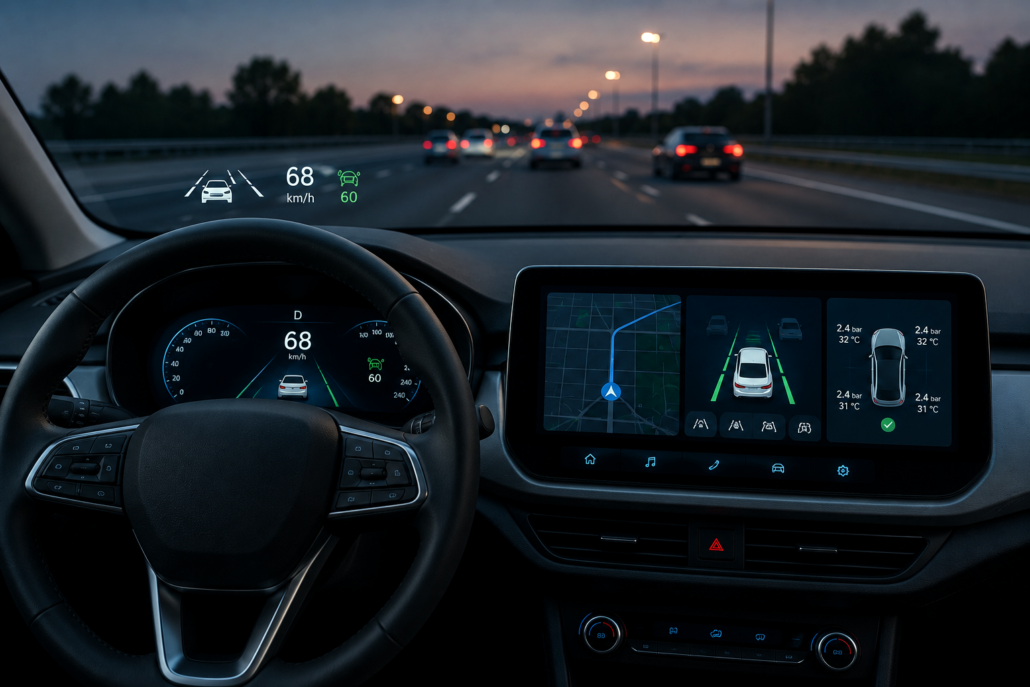
Modern vehicle dashboard displaying navigation, advanced driver assistance system (ADAS) features, digital instrumentation, and real-time vehicle diagnostics powered by embedded systems.
Applications include:
- Engine control units (ECUs)
- Anti-lock braking systems (ABS)
- Infotainment systems
- Advanced driver-assistance systems (ADAS)
- Electric vehicle battery management
Embedded operating systems help ensure reliability and real-time performance in these safety-critical environments.
Industrial Automation
Factories and industrial facilities rely heavily on embedded operating systems. Examples include:
- Programmable logic controllers (PLCs)
- Robotic assembly systems
- Manufacturing equipment
- Process control systems
These applications require predictable and continuous operation.
Medical Devices
Healthcare equipment depends on embedded operating systems for accuracy and reliability.
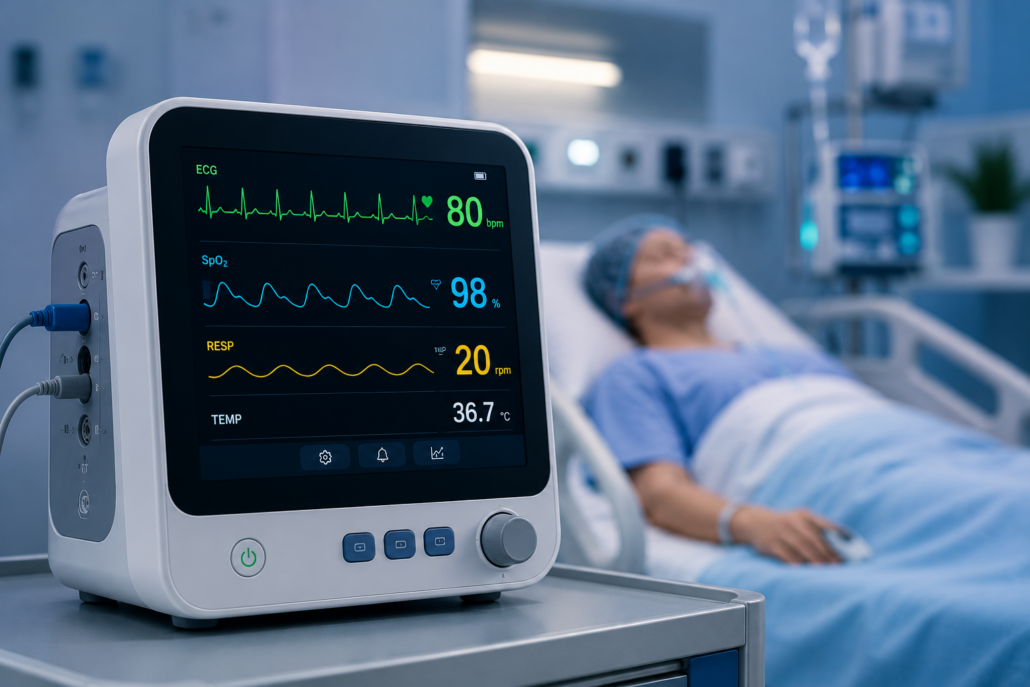
Hospital patient monitoring system displaying real-time vital signs, health metrics, and medical data in a modern healthcare environment powered by embedded operating systems.
Examples include:
- Patient monitoring systems
- Ventilators
- Infusion pumps
- Diagnostic imaging equipment
- Wearable health monitors
Many medical devices use RTOS platforms to guarantee timely responses.
Telecommunications
Network infrastructure uses embedded operating systems to manage communication and data transmission. Examples include:
- Routers
- Network switches
- Base stations
- Satellite communication systems
These systems require high reliability and efficient resource management.
Aerospace and Defense
Embedded operating systems play a crucial role in mission-critical applications. Examples include:
- Flight control systems
- Navigation equipment
- Radar systems
- Military communication devices
- Unmanned aerial vehicles (UAVs)
These environments demand exceptional stability and real-time performance.
Internet of Things (IoT)
IoT devices represent one of the fastest-growing areas for embedded operating systems.

Smart home ecosystem featuring connected thermostat, smart lighting, security camera, sensors, and mobile controls communicating through Internet of Things technology.
Examples include:
- Smart thermostats
- Smart locks
- Environmental sensors
- Connected appliances
- Smart lighting systems
Embedded operating systems enable these devices to communicate efficiently while consuming minimal power.
Popular Examples of Embedded Operating Systems
Embedded Linux
Embedded Linux is one of the most widely used embedded operating systems. It offers flexibility, open-source development, and extensive hardware support.
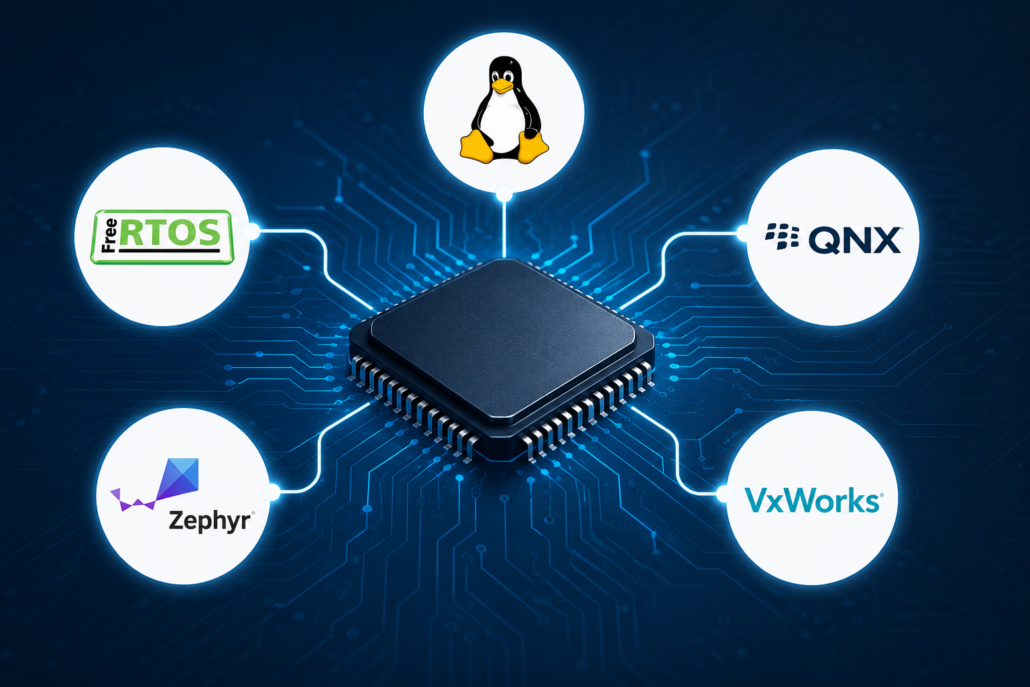
Processor chip surrounded by popular embedded operating systems including Embedded Linux, FreeRTOS, QNX, Zephyr, and VxWorks in a technology comparison illustration.
Common applications:
- Smart TVs
- Network devices
- Industrial controllers
- Automotive infotainment systems
FreeRTOS
FreeRTOS is a lightweight, open-source real-time operating system designed for microcontrollers. Features include:
- Small memory footprint
- Real-time scheduling
- Broad hardware compatibility
- IoT support
It is commonly used in sensors, wearable devices, and smart home products.
VxWorks
VxWorks is a commercial RTOS known for reliability and real-time performance. Applications include:
- Aerospace systems
- Medical equipment
- Defense technologies
- Industrial automation
QNX
QNX is widely used in automotive and industrial environments due to its microkernel architecture and high reliability. Common uses:
- Vehicle infotainment systems
- Autonomous driving platforms
- Industrial control systems
Zephyr OS
Zephyr is an open-source RTOS designed for resource-constrained IoT devices. Advantages include:
- Security-focused architecture
- Scalability
- Low power consumption
- Multi-platform support
ThreadX
ThreadX is a high-performance RTOS commonly used in embedded and IoT applications. It supports:
- Deterministic scheduling
- Fast interrupt handling
- Minimal memory usage
Advantages of Embedded Operating Systems
Improved Efficiency
Embedded operating systems are optimized for specific tasks, allowing devices to perform efficiently with limited resources.
Enhanced Reliability
Their specialized design reduces unnecessary complexity, improving system stability and uptime.
Faster Response Times
Real-time capabilities enable immediate responses to critical events.
Lower Hardware Requirements
Embedded operating systems require less memory and processing power than general-purpose operating systems.
Better Security
Customized operating systems reduce attack surfaces and improve device security.
Scalability
Manufacturers can tailor embedded operating systems for applications ranging from simple sensors to advanced industrial systems.
Challenges of Embedded Operating Systems
Despite their benefits, embedded operating systems face several challenges:
- Limited hardware resources
- Security vulnerabilities in connected devices
- Complexity of real-time requirements
- Long product life cycles requiring ongoing updates
- Hardware compatibility issues
Developers must carefully balance performance, reliability, power consumption, and security when designing embedded solutions.
Future of Embedded Operating Systems
The future of embedded operating systems is closely tied to emerging technologies such as artificial intelligence, edge computing, 5G networks, and advanced IoT ecosystems.
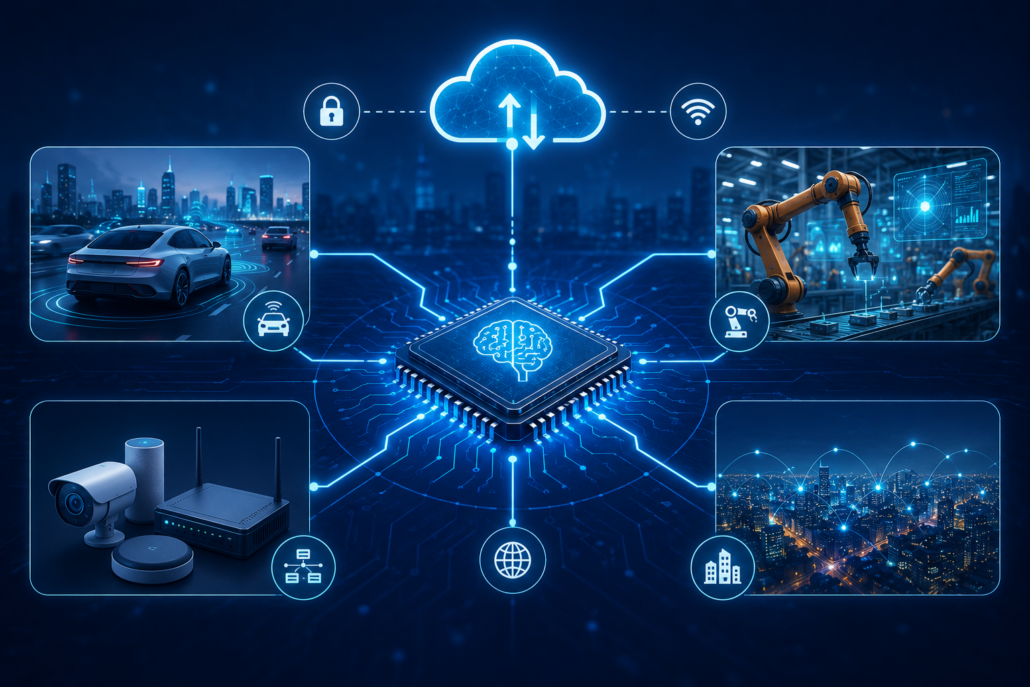
Futuristic embedded operating system ecosystem connecting AI-powered edge devices, autonomous vehicles, smart factories, IoT networks, and cloud infrastructure through advanced computing technologies.
Modern embedded operating systems are increasingly incorporating:
- AI and machine learning capabilities
- Enhanced cybersecurity features
- Cloud integration
- Edge analytics
- Energy-efficient computing
As connected devices continue to grow in number and complexity, embedded operating systems will remain at the heart of technological innovation across industries.
Conclusion
Embedded operating systems are essential components of modern technology, powering everything from household appliances and wearable devices to industrial machinery and autonomous vehicles. Their ability to deliver reliable, efficient, and real-time performance makes them ideal for dedicated applications with specific operational requirements. Popular platforms such as Embedded Linux, FreeRTOS, QNX, VxWorks, and Zephyr demonstrate the versatility of embedded operating systems across diverse industries. As IoT, automation, and smart technologies continue to evolve, embedded operating systems will play an even greater role in shaping the connected world of the future.