Windows File System: NTFS vs. FAT32 and exFAT
Choosing the right file system is an important part of managing storage on a Windows PC. Whether you are formatting an internal SSD, preparing a USB flash drive, setting up an external hard drive, or creating a bootable drive, the file system you choose can affect compatibility, file size limits, security, performance, and reliability.
Table of Contents
Among the most common file systems Windows users encounter are NTFS, FAT32, and exFAT. Each one was designed with different priorities in mind. NTFS is the standard choice for Windows system drives, while FAT32 remains popular because of its broad compatibility. exFAT sits between the two, offering support for large files and volumes while maintaining excellent compatibility with many modern devices.
Understanding the differences between NTFS vs. FAT32 vs. exFAT can help you choose the best file system for your storage needs.
What is a File System?
A file system is the method an operating system uses to organize, store, name, and retrieve data on a storage device. It determines how files and folders are recorded and how the operating system manages available storage space. When you format a drive, you generally select a file system. Windows can work with several file systems, but NTFS, FAT32, and exFAT are among the most relevant for everyday users.

Visual representation of how a Windows file system organizes files and storage data.
The right choice depends on what you plan to do with the drive. An internal Windows installation has different requirements from a USB drive that needs to work with Windows, macOS, cameras, game consoles, and other devices.
What is NTFS?
NTFS, or New Technology File System, is the primary file system used by modern Windows installations. Microsoft introduced NTFS with Windows NT, and it has evolved significantly over the years. NTFS is designed for reliability, security, and advanced storage management. It supports features such as file permissions, encryption capabilities, compression, journaling, and large files and volumes.

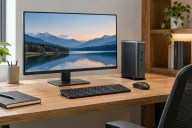
NTFS file system represented with a Windows PC and internal SSD storage.
For a Windows system drive, NTFS is normally the preferred choice because Windows relies on several of its capabilities. One of NTFS’s biggest advantages is its support for file and folder permissions. Administrators can control which users or accounts can access specific files and directories. This makes NTFS much better suited to operating system drives and professional environments than FAT32. NTFS also uses journaling to help maintain file-system consistency after unexpected shutdowns or system failures. This does not make data loss impossible, but it can make the file system more resilient than older non-journaled designs.
Advantages
- Excellent integration with Windows
- Supports very large files and volumes
- File and folder permissions
- Journaling for improved file-system reliability
- Supports advanced Windows storage features
- Suitable for internal SSDs and hard drives
Disadvantages
- Limited compatibility with some non-Windows devices
- Not always the best choice for cameras, TVs, consoles, or other consumer electronics
- Some devices may only offer read support or no support at all
For a drive that will primarily be used with Windows PCs, NTFS is usually the safest choice.
What is FAT32?
FAT32 or File Allocation Table 32, is an older file system that remains popular because of its exceptional compatibility. It was introduced as an evolution of earlier FAT file systems and became widely used across computers, memory cards, USB drives, cameras, and other devices.

FAT32 file system represented by a USB flash drive and compatible consumer devices.
The major advantage of FAT32 is simplicity and broad device support. Many operating systems and consumer electronics can recognize FAT32 without requiring additional drivers or special configuration. However, FAT32 has a major limitation: a single file cannot be larger than 4 GB. This can be a serious problem when transferring modern high-resolution videos, disk images, large software packages, or other files exceeding that limit. FAT32 also lacks many of the advanced security and reliability features available with NTFS.
Advantages
- Extremely broad compatibility
- Works with many operating systems and devices
- Useful for older hardware
- Simple and widely supported
- Suitable for smaller storage devices and files
Disadvantages
- Maximum individual file size of approximately 4 GB
- Lacks NTFS-style permissions
- No journaling
- Less suitable for modern Windows system drives
- Can be inconvenient for large modern storage devices
FAT32 is therefore best viewed as a compatibility-focused file system rather than the ideal general-purpose choice for modern Windows storage.
What is exFAT?
exFAT, or Extended File Allocation Table, was designed to overcome several limitations of FAT32 while preserving much of its cross-platform convenience. Microsoft introduced exFAT primarily for flash storage and removable media. It supports much larger files and storage capacities than FAT32, making it far more practical for modern USB flash drives, SDXC cards, and external storage.

exFAT file system represented by portable storage transferring large files.
One of the biggest reasons to choose exFAT is its ability to handle files larger than 4 GB. This makes it useful for transferring large videos, backups, disk images, and other modern files between computers and devices. Unlike NTFS, exFAT does not provide the same set of Windows security and journaling features. However, this is often an acceptable trade-off for removable storage where broad compatibility matters more than advanced Windows features.
Advantages
- Supports files much larger than 4 GB
- Excellent for removable storage
- Broad compatibility with modern operating systems
- Well suited to USB flash drives and memory cards
- More practical than FAT32 for large modern files
Disadvantages
- Does not offer the full feature set of NTFS
- Not the preferred file system for Windows system drives
- Compatibility can vary with older devices
For external storage that needs to move between Windows and other modern platforms, exFAT is often an excellent choice.
NTFS vs. FAT32 vs. exFAT
The biggest differences between these three file systems involve compatibility, file-size support, security, and intended use.
| Feature | NTFS | FAT32 | exFAT |
|---|---|---|---|
| Windows system drive | Excellent | Not recommended | Not recommended |
| Large files | Excellent | Limited to 4 GB per file | Excellent |
| Windows security features | Yes | No | Limited |
| Journaling | Yes | No | No |
| Windows compatibility | Excellent | Excellent | Excellent |
| Cross-platform compatibility | Good | Excellent | Very good |
| USB flash drives | Good | Good | Excellent |
| External drives | Excellent | Good | Excellent |
| Older devices | Limited | Excellent | Variable |
The table highlights an important point: there is no universally best file system. The best option depends on how and where the storage device will be used.

Comparison of NTFS FAT32 and exFAT file systems using different storage devices.
Which File System Should You Choose?
For an internal Windows SSD or hard drive, NTFS is generally the best choice. It integrates closely with Windows and provides useful security and reliability features. For a USB drive that needs to work with older devices, FAT32 can still be useful. It is particularly appropriate when individual files will remain below the 4 GB limit.

Different storage scenarios for choosing between NTFS FAT32 and exFAT.
For a modern USB flash drive or external SSD, exFAT is often the most convenient option when the drive needs to move between different operating systems and devices while storing files larger than 4 GB. For example, if you regularly transfer 4K video files between a Windows PC and another modern computer, FAT32 can quickly become a problem. exFAT avoids the 4 GB individual-file restriction while retaining strong compatibility.
NTFS vs. exFAT for External Drives
The choice between NTFS and exFAT is especially important for external storage. Choose NTFS when the drive will primarily remain connected to Windows computers and you want Windows-specific features such as permissions and journaling. Choose exFAT when portability is more important. An exFAT-formatted drive can be convenient when files need to move between different operating systems and supported consumer devices. In other words, NTFS prioritizes Windows functionality, while exFAT prioritizes portability.
FAT32 vs. exFAT
The choice between FAT32 and exFAT is generally straightforward for modern storage. If maximum compatibility with older devices is the priority and your files are relatively small, FAT32 remains useful. If you need to store files larger than 4 GB, exFAT is usually the better option. A large video file is a simple example. A 6 GB video cannot be stored as a single file on a FAT32 drive, but exFAT can handle files of this size without the same limitation.
Can You Change the File System?
Yes. Windows allows you to format compatible storage devices using different file systems. However, formatting normally erases the existing data on the drive. Before formatting, always back up important files. If a drive contains valuable data, do not format it until you have confirmed that the data exists somewhere else. Windows tools such as File Explorer, Disk Management, and command-line utilities can be used for formatting, depending on the situation.
Final Verdict
NTFS, FAT32, and exFAT each have a clear purpose. NTFS is the best all-around choice for Windows system drives and storage that is primarily used with Windows. Its security, reliability, and advanced features make it particularly suitable for modern PCs. FAT32 remains valuable because of its exceptional compatibility, but its 4 GB maximum individual file size makes it less suitable for modern large-file workloads. exFAT is often the best choice for removable storage when you need large-file support and compatibility across multiple modern platforms. The simplest way to remember the difference is this: choose NTFS for Windows, FAT32 for maximum legacy compatibility, and exFAT for portable storage and large files. Understanding these differences can prevent common formatting mistakes and help you get better performance, compatibility, and flexibility from your storage devices.