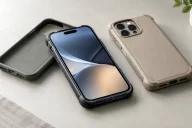
Waterproof Phone Cases for Outdoor Adventures
Outdoor adventures often take you into environments where your smartphone faces more risks than usual. Whether you are hiking through misty mountains, kayaking across a lake, relaxing at the beach, or exploring a rainforest, water, dust, mud, and accidental drops can put your device in danger. A reliable waterproof phone case helps protect your smartphone while allowing you to capture memorable moments, navigate unfamiliar trails, and stay connected during your journey.
Table of Contents
- Why Waterproof Phone Cases are Essential for Outdoor Adventures
- Important Features to Look for in Waterproof Phone Cases
- Best Types of Waterproof Phone Cases for Different Activities
- How to Choose the Right Case for Your Adventure
- Tips for Using Waterproof Phone Cases Safely
- Common Mistakes to Avoid When Buying Waterproof Phone Cases
- Final Thoughts
Choosing the right waterproof phone cases for outdoor adventures involves more than finding a cover that keeps water away. You also need to consider protection against dust, impact resistance, touchscreen usability, camera clarity, and comfort during extended outdoor activities. Understanding these features makes it easier to find a case that suits your travel style and provides dependable protection in challenging conditions.
Why Waterproof Phone Cases are Essential for Outdoor Adventures
Smartphones have become essential tools for outdoor enthusiasts. They provide navigation, weather updates, emergency communication, photography, and access to travel information. However, many outdoor environments expose phones to moisture and physical damage that ordinary protective cases cannot prevent.
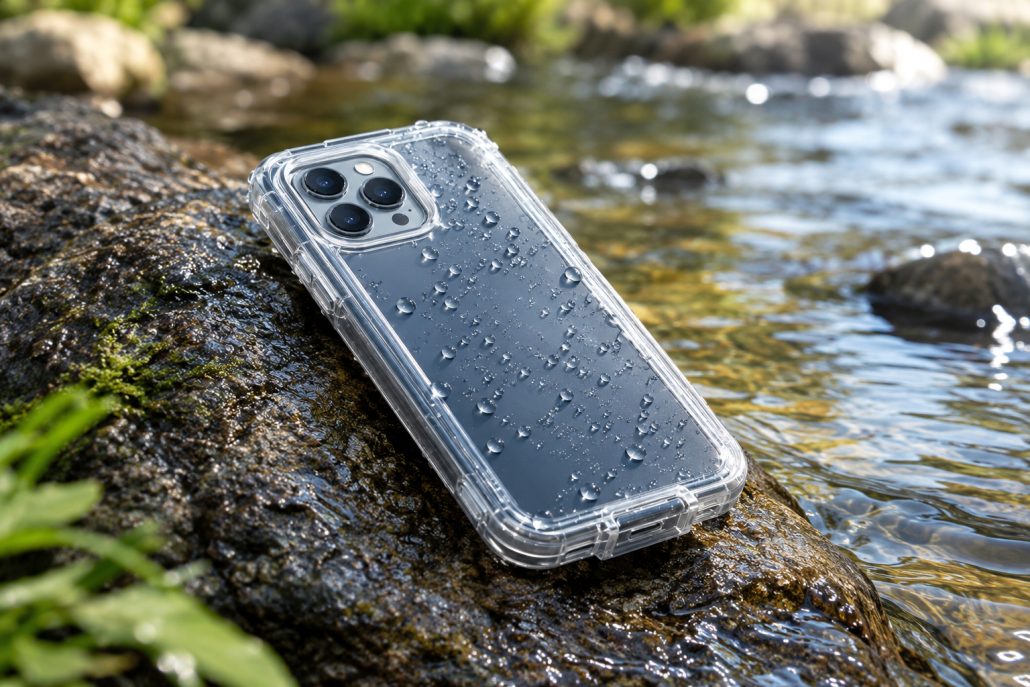
A smartphone inside a transparent waterproof case resting on a wet stone beside a flowing stream.
A splash-resistant case may work well during everyday activities, but it might not offer sufficient protection when you are swimming, kayaking, or caught in heavy rain. Waterproof phone cases are designed to create a protective barrier against water, although their actual capabilities depend on the product’s construction and tested limits.
Sand and dust are equally troublesome. Fine particles can enter charging ports, interfere with buttons, and scratch delicate surfaces. Outdoor activities can also lead to accidental drops on rocks, gravel, or hard ground. A well-designed waterproof case can provide additional protection against these hazards while helping your smartphone remain functional throughout your trip.
Important Features to Look for in Waterproof Phone Cases
Water Resistance and Submersion Protection
The most important consideration is the level of water protection a case offers. Some models are designed primarily for rain and splashes, while others can protect a compatible smartphone during temporary submersion.
Check the manufacturer’s stated depth and duration limits before purchasing. A case advertised as waterproof should not automatically be considered suitable for underwater photography or prolonged swimming.
Look for clearly documented testing standards and instructions for sealing the case correctly. An improperly closed waterproof case may allow water to enter even when the product is designed for submersion.
It is also important to understand the difference between a phone’s built-in water resistance and the protection provided by an external case. Neither should be treated as unlimited protection, particularly after wear, impact, or exposure to harsh conditions.
Dustproof and Dirt Protection
Outdoor adventures frequently involve dirt, sand, and debris. Hiking trails, campsites, beaches, and cycling routes can expose smartphones to particles that interfere with their operation.
A protective case with tightly sealed edges, covered ports, and secure closures can help reduce this risk. Some rugged waterproof models also provide protection against fine dust, making them suitable for dusty trails and challenging environments.
If you regularly visit beaches or desert locations, prioritize a design that limits sand exposure around buttons, charging connections, and camera openings.
Shock Absorption and Drop Protection
Water is not the only threat to your smartphone. A device can easily slip from your hand when you are climbing, paddling, or walking across wet surfaces.
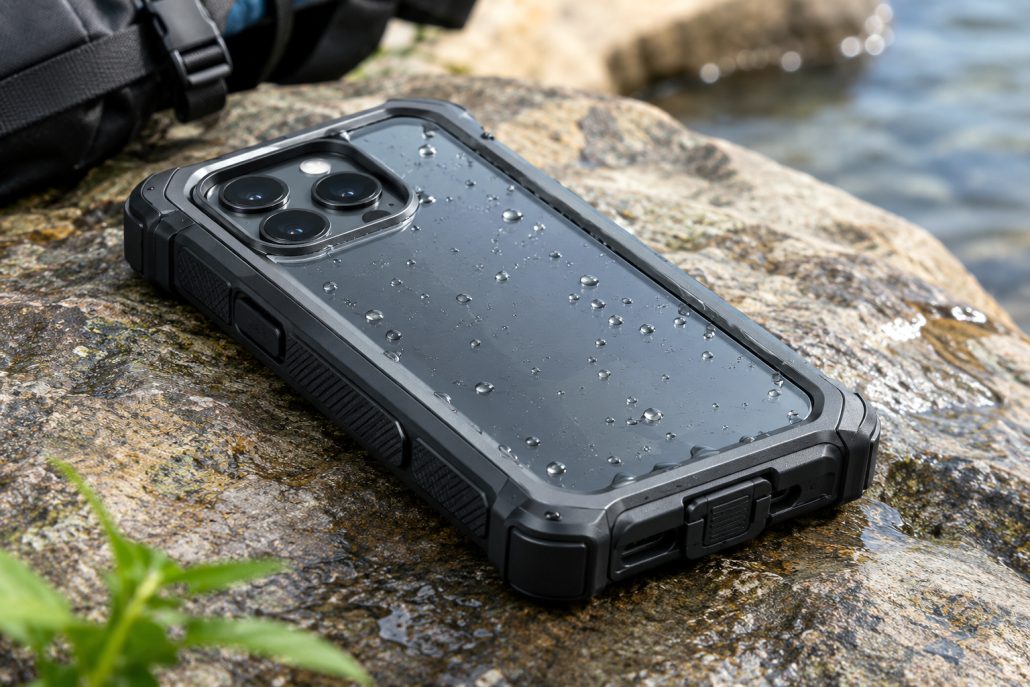
Close-up of a rugged waterproof phone case showing reinforced corners, textured grips, and covered charging ports.
Look for reinforced corners, shock-absorbing materials, and raised protective edges around the display and camera. These features can help reduce damage from accidental impacts.
A waterproof case with rugged construction is particularly useful for mountain hiking, camping, trail running, and cycling. However, drop protection varies between products, so check the manufacturer’s tested drop height and conditions rather than relying on appearance alone.
Camera Clarity and Touchscreen Performance
A protective case should not make your smartphone difficult to use. Clear front and rear panels allow you to take photographs without removing the device from its protective enclosure.
Before buying, check whether the case is compatible with your phone’s camera layout. Some waterproof covers can introduce glare, reflections, or reduced image sharpness, particularly when photographing through plastic underwater.
Touchscreen responsiveness is another important factor. A well-designed case should allow you to access essential apps, adjust settings, and operate navigation tools without repeatedly removing your phone.
If you plan to use your device in cold weather, with wet hands, or while wearing gloves, check how the case performs under those conditions.
Best Types of Waterproof Phone Cases for Different Activities
Waterproof Pouches for Swimming and Beach Trips
Waterproof phone pouches are lightweight, portable, and often compatible with several smartphone sizes. They usually feature a transparent body and a sealed closure system that helps keep water and sand away from the device.
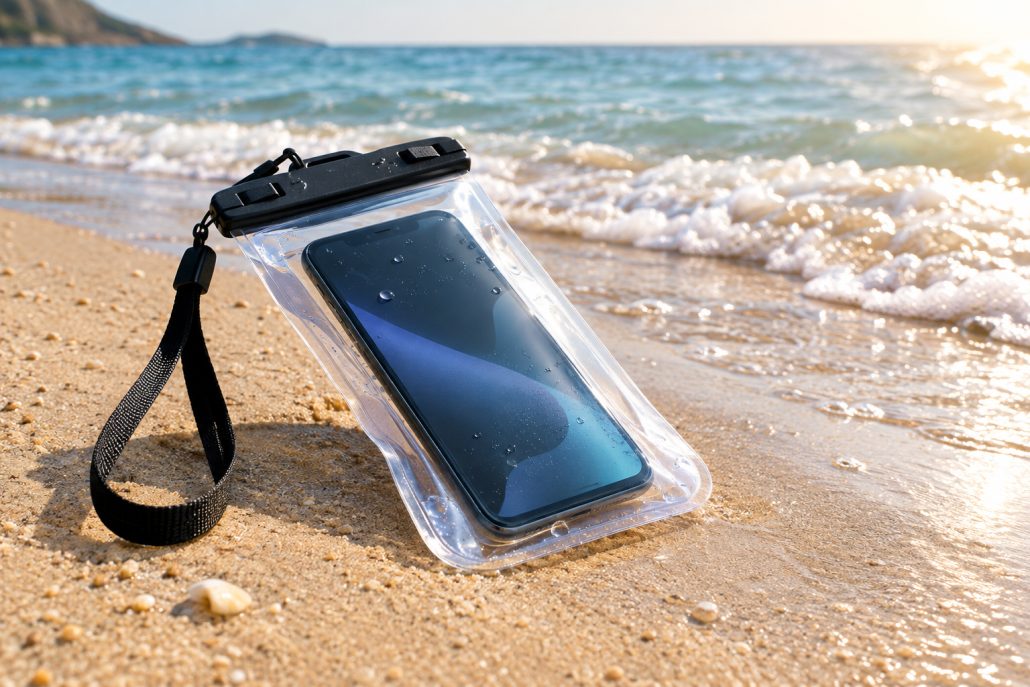
A smartphone secured inside a transparent waterproof pouch with a wrist lanyard on a sandy beach.
These pouches are convenient for beach visits, boat rides, swimming pool outings, and casual water activities. Many include neck straps or wrist lanyards, making them easier to carry.
However, not every pouch is suitable for underwater photography. Pressure can affect touchscreen operation and may press against the pouch’s surface. Choose a product with clearly stated submersion limits and test its seal before every outing.
Rugged Waterproof Cases for Hiking and Camping
Rugged waterproof cases combine moisture protection with reinforced construction. They are designed for users who need additional protection against drops, dust, mud, and rough handling.
These cases are suitable for hiking, camping, mountain exploration, and multi-day outdoor trips. Depending on the design, they may include port covers, reinforced corners, and textured sides for improved grip.
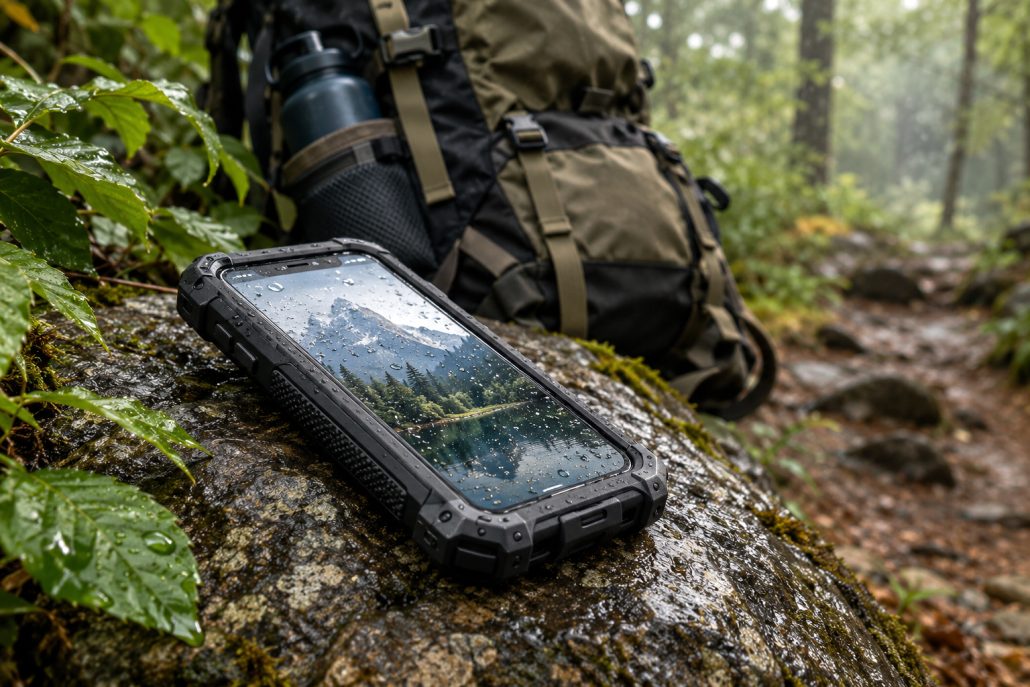
A rugged waterproof smartphone case resting on a damp rock along a forest hiking trail.
The main trade-off is bulk. Rugged cases can make a smartphone heavier and less comfortable to use with one hand. Check the dimensions and weight before purchasing, especially if you prefer lightweight travel gear.
Floating Waterproof Cases for Kayaking and Boating
When you are on a lake, river, or boat, dropping your phone into the water can make it difficult or impossible to recover. Floating waterproof cases are designed to help certain devices remain on the water’s surface if accidentally dropped.
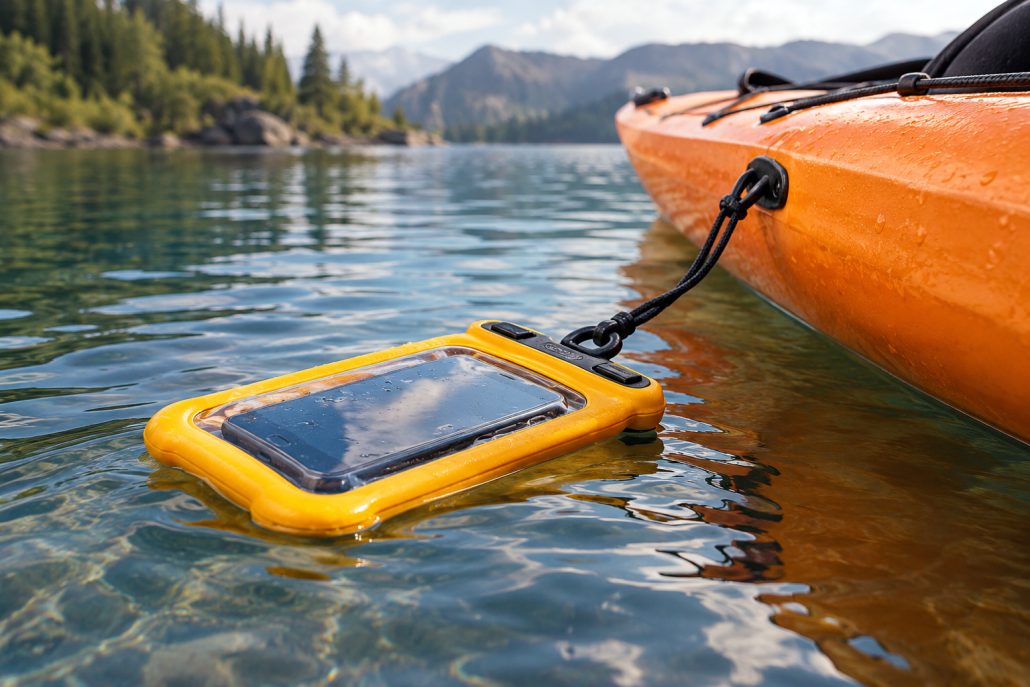
A floating waterproof phone case carrying a smartphone on the surface of a calm lake beside a kayak.
They are useful for kayaking, paddleboarding, fishing, and recreational boating. Some include bright colors that make the case easier to spot.
Floating capability depends on the phone’s weight and the case’s buoyancy. Always verify the manufacturer’s compatibility guidance, and remember that a floating case can still drift away in moving water.
Slim Waterproof Cases for Everyday Travel
Not every outdoor activity requires a bulky protective enclosure. Slim waterproof cases offer a more compact option for sightseeing, light hiking, walking, and everyday travel.
They can provide useful protection against rain and splashes while preserving access to essential smartphone functions. Some designs also support wireless charging, although compatibility depends on the case’s thickness and materials.
For demanding activities involving repeated submersion or severe impacts, a slim case may not offer the same level of protection as a dedicated rugged model.
How to Choose the Right Case for Your Adventure
Start by considering the environments you visit most often. Someone who spends weekends hiking through forests may prioritize dust resistance, drop protection, and secure handling. A swimmer or kayaker may need a fully sealed case with verified submersion protection and, ideally, a suitable floating feature.
Next, confirm compatibility with your exact smartphone model. Camera placements, button positions, dimensions, and charging ports differ between devices. A case designed for a similar-looking phone may not seal correctly.
Consider how frequently you need to access your device. Travelers who regularly take photographs, use maps, or check messages may prefer a case with responsive controls and clear camera panels. Those who mainly want protection while swimming may find a simple waterproof pouch more practical.
Budget is another consideration, but the cheapest option is not always the best value. Prioritize documented protection, durable sealing mechanisms, reliable construction, and a clear warranty policy.
Finally, check whether the case supports your preferred accessories, including lanyards, wrist straps, wireless charging, or mounting systems. These details can make a noticeable difference during longer trips.
Tips for Using Waterproof Phone Cases Safely
Even a high-quality waterproof case requires proper handling. Before taking your phone near water, inspect the seals, locking mechanisms, and protective panels for damage. Follow the manufacturer’s instructions to close every latch or sealing component correctly.
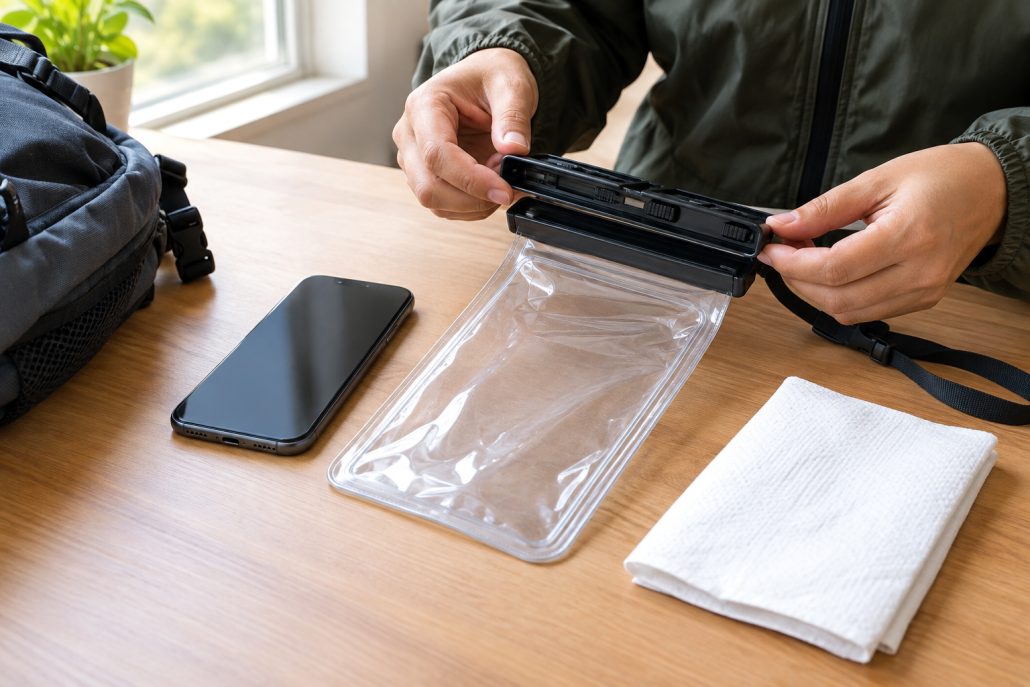
An empty waterproof phone pouch and absorbent paper towel arranged on a table before testing the case seal.
Perform a water test according to the manufacturer’s directions before first use, usually with an empty case and an absorbent paper towel inside. Never assume a new case is sealed simply because it looks secure.
Avoid opening the case with wet or sandy hands. Small particles trapped along the sealing edges can compromise the protective barrier. Rinse the exterior with clean fresh water after exposure to saltwater or mud, following the product’s care instructions.
Waterproof protection can deteriorate over time due to repeated use, stretching, impacts, and material wear. Replace a case if its seals become damaged or its closure mechanism no longer works properly.
Remember that waterproof cases do not guarantee that a phone will survive every water-related accident. Avoid exceeding the stated depth or duration limits, and do not assume that a case suitable for rain is safe for swimming.
Common Mistakes to Avoid When Buying Waterproof Phone Cases
One common mistake is choosing a case based only on the word waterproof. Without clear information about water depth, exposure duration, and testing conditions, it can be difficult to know whether the product suits your intended activity.
Another mistake is ignoring impact protection. A case may keep water out but still provide limited protection against a fall onto rocks. Match the case’s construction to the physical risks of your adventures.
Some users also overlook camera performance, touchscreen responsiveness, and ease of opening. These features become particularly important when you need to take quick photographs or check navigation information outdoors.
Finally, avoid relying entirely on a phone’s built-in water resistance. Manufacturer ratings are based on specific test conditions, and real-world exposure can be different. An appropriate external case offers an additional protective barrier when used correctly.
Final Thoughts
The right waterproof phone cases for outdoor adventures help protect your smartphone from water, dust, dirt, and accidental impacts while making outdoor activities more convenient. From lightweight waterproof pouches for beach visits to rugged enclosures for hiking and floating cases for kayaking, different designs serve different needs.
Before making a purchase, evaluate water protection limits, drop resistance, camera clarity, touchscreen performance, and compatibility with your device. Follow the manufacturer’s maintenance instructions and inspect the seals regularly to maintain reliable protection.
A carefully chosen waterproof phone case allows you to enjoy your adventures with greater confidence, whether you are exploring a mountain trail, relaxing beside the sea, or capturing memories on the water. Investing in suitable protection can help keep your smartphone ready for the moments that matter most.